
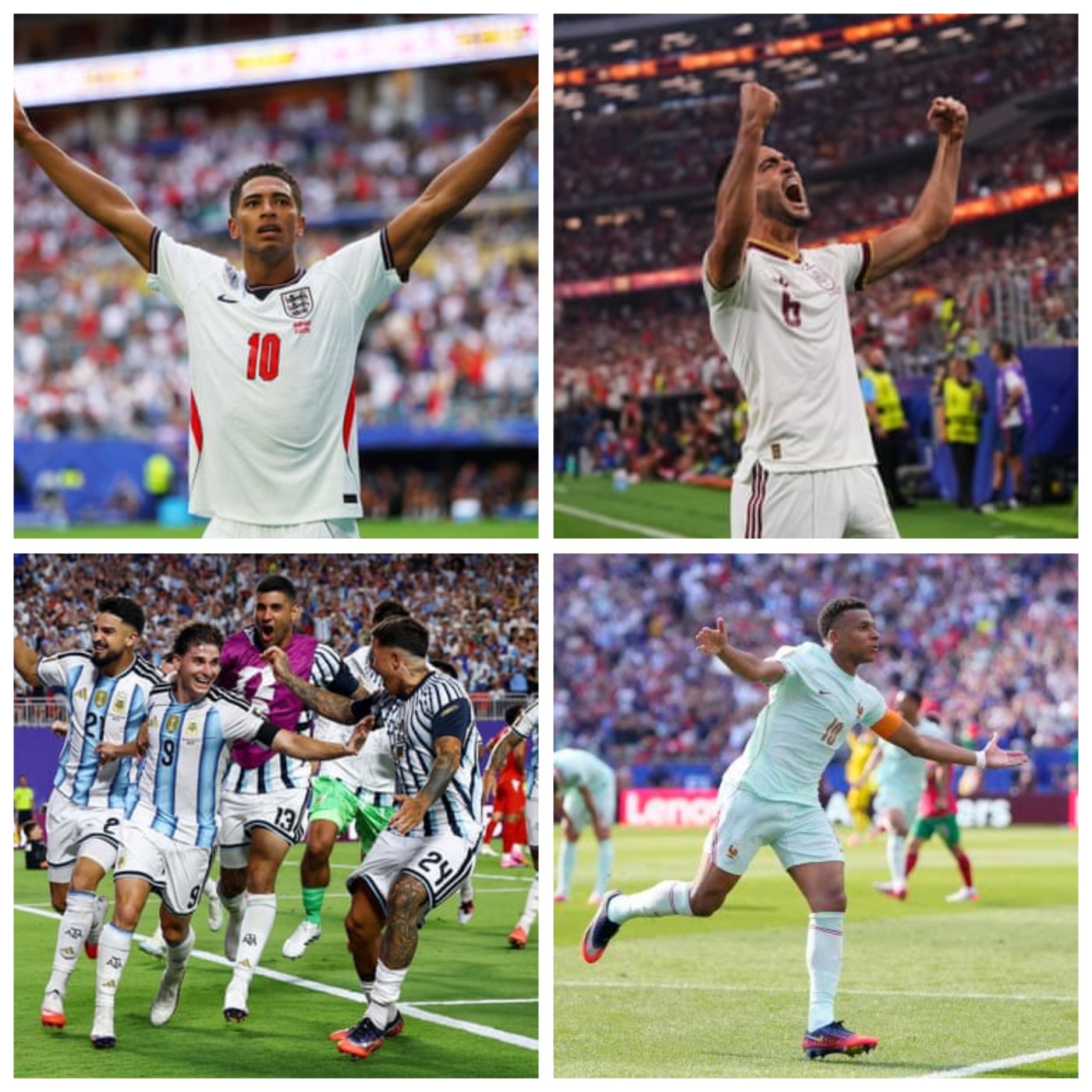
The quarter-finals are where a World Cup starts to feel brutally small. By this stage, there are no soft routes left, no hidden second chances and no room for nearly moments. Every team that reaches this point has already proved something, but only four can move on.
This round had a clear theme: the favourites found a way through, but very few had it easy. France ended Morocco’s run with cold efficiency. Spain edged Belgium in a tight, technical contest. England needed extra time and another Jude Bellingham rescue act to get past Norway. Argentina were pushed deep by Switzerland before their bench and big-game experience finally told.
Surprise Results
England’s 2-1 win over Norway was not a surprise in terms of the final outcome, but it was one of the round’s most dramatic games. Norway took the lead through Andreas Schjelderup and looked capable of another major knockout statement after eliminating Brazil in the previous round. England struggled for rhythm, but Bellingham dragged them level before scoring again in extra time. It was less a smooth England performance and more a survival job built around one outstanding player.
Argentina’s 3-1 win over Switzerland also carried more drama than the scoreline suggests. Switzerland forced the game into extra time and made Argentina work for everything. The champions eventually had too much quality, but this was not a procession. It was another reminder that Switzerland remain one of international football’s most awkward tournament sides.
Star Players
Jude Bellingham was the standout player of the quarter-finals. England were in danger against Norway, and once again he became the player who bent the game back towards them. His equaliser changed the emotional direction of the match, and his extra-time winner showed the instinct of a player who now looks completely comfortable deciding the biggest games.
Kylian Mbappé was decisive for France against Morocco. In a tight quarter-final, France needed someone to break the resistance, and Mbappé did exactly that. His goal gave France control and forced Morocco to open up, which changed the entire shape of the match.
Ousmane Dembélé also deserves major credit. His goal six minutes after Mbappé’s opener turned a narrow French lead into a controlled win. Dembélé’s directness, speed and willingness to attack space gave Morocco problems once the game stretched.
Mikel Merino continued his excellent knockout-stage impact by scoring Spain’s winner against Belgium. In a match full of technical quality but short on space, Merino gave Spain the decisive moment. He is becoming the kind of tournament player every elite side needs: intelligent, reliable and dangerous at exactly the right time.
Julián Álvarez produced the defining moment for Argentina against Switzerland. His extra-time goal shifted the game decisively in Argentina’s favour and helped set up a huge semi-final against England. Argentina still revolve emotionally around Lionel Messi, but Álvarez’s ability to produce in high-pressure moments is becoming just as important.
Ones to Watch
Spain are now the team to watch.
Their 2-1 win over Belgium was not their most spectacular performance of the tournament, but it may prove to be one of their most important. Belgium arrived with momentum after their heavy win over the United States, and this was exactly the type of game that can unsettle Spain: technically strong opposition, little space between the lines and enough attacking quality to punish any overcommitment.
Spain still found a way through, and that is why they look so dangerous now. They have the familiar control in possession, but this version of Spain does not feel as sterile as some previous sides. Fabián Ruiz gives them timing and calm in midfield. Mikel Merino provides late runs, physical presence and decisive end product. Lamine Yamal gives them width, unpredictability and the ability to stretch compact defences.
That balance matters. Spain are no longer just a team that can dominate the ball; they are a team that can win different types of matches. They beat Portugal with a late goal in the Round of 16, then edged Belgium in another tight knockout contest. Those are the wins that show tournament maturity.
The semi-final against France will be their biggest test yet, but Spain look like the most complete side left. They have control, technical quality, youthful spark and enough goals from midfield to avoid becoming predictable. At this stage of a World Cup, that combination is extremely hard to ignore.
Underachievers
Belgium will feel they missed a real opportunity. Losing 2-1 to Spain is no disgrace, but after their strong performance against the United States, this was a chance to prove they had truly arrived in the tournament. Instead, they were edged out by a side with more composure in decisive moments.
Norway also exit with regret. They had England under pressure, took the lead and had moments where the game looked there for them. Their tournament has still been excellent, but quarter-finals are unforgiving. When Bellingham lifted England, Norway could not quite respond.
Unsung Heroes
Morgan Rogers deserves recognition for England. Bellingham got the winner, but Rogers’ powerful shot created the rebound that led to the decisive goal. In knockout football, those moments matter. He changed the rhythm of the attack when England badly needed fresh energy.
Fabián Ruiz was vital for Spain. Merino’s winner will take a lot of attention, but Fabián’s goal gave Spain the platform they needed against Belgium. His timing from midfield and calmness in possession helped Spain control difficult passages of the game.
Dayot Upamecano was important for France against Morocco. While Mbappé and Dembélé decided the match going forward, France also needed defensive concentration against a Moroccan side capable of punishing loose moments. Upamecano helped keep the back line stable until the attack took over.
Alexis Mac Allister quietly set the tone for Argentina. His goal gave them the breakthrough, and his midfield control helped Argentina stay composed during a match that could easily have become awkward.
Gregor Kobel also deserves credit despite Switzerland’s defeat. Argentina eventually found a way through, but Kobel’s presence helped Switzerland stay in the contest for as long as they did. Sometimes an unsung performance comes in a losing cause.
Final Takeaway
The quarter-finals did not completely tear up the tournament, but they sharpened it.
France, Spain, England and Argentina are through. Four major football nations remain, and each arrived there in a slightly different way. France looked clinical. Spain looked composed. England looked resilient. Argentina looked experienced.
For Morocco, Norway, Belgium and Switzerland, there is disappointment but also dignity. Morocco’s run reinforced their status as a serious tournament nation. Norway proved they belong at this level. Belgium showed flashes of quality but not enough consistency. Switzerland were, once again, stubborn and difficult to beat.
The semi-finals now have the feel of a heavyweight closing act. France against Spain offers control, pace and technical quality. England against Argentina brings history, pressure and two of the tournament’s defining players in Bellingham and Messi.
The margins are tiny now. One finish, one save, one substitution, one lapse. That is what separates a World Cup semi-finalist from a team heading home.


Leave a Reply