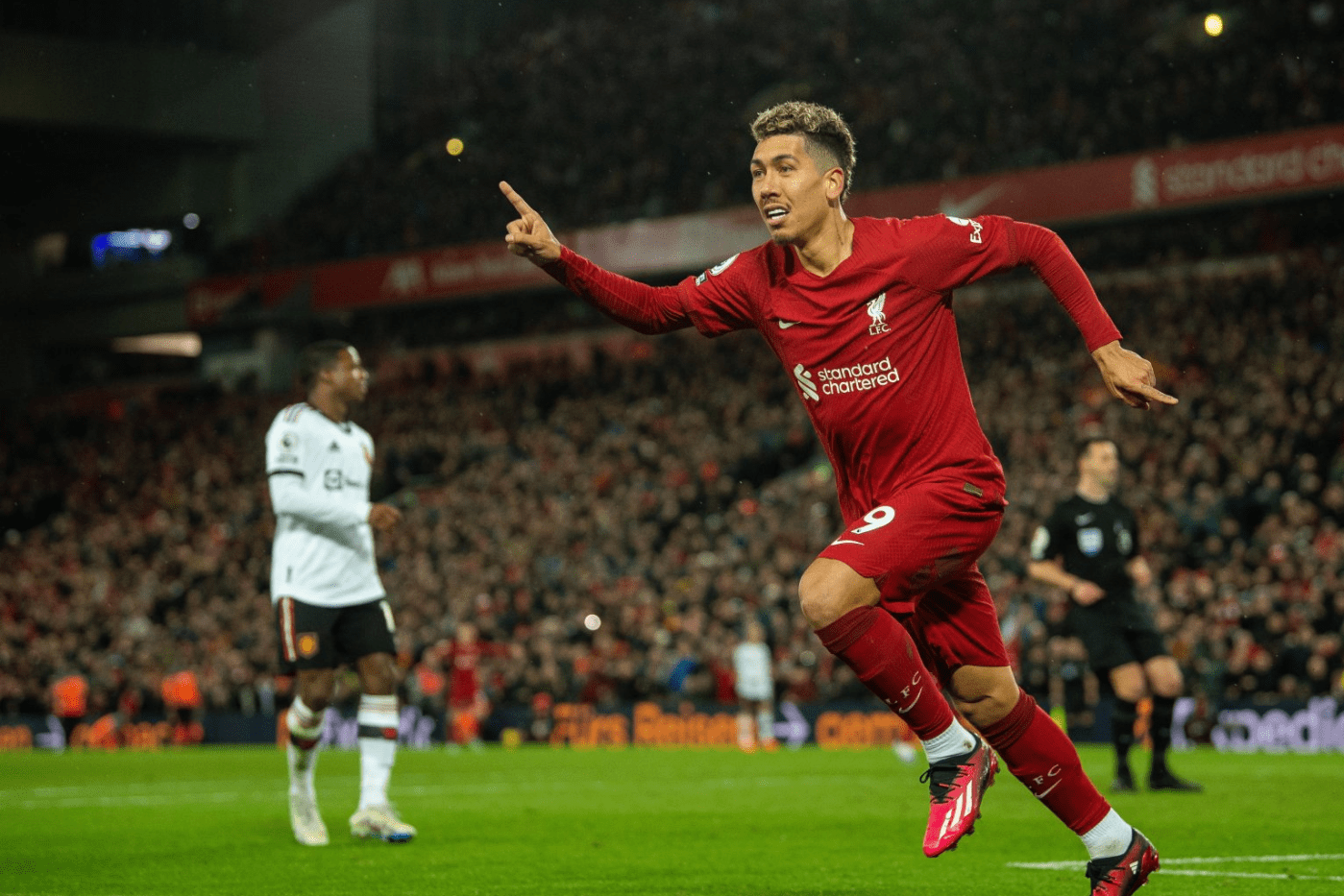
Roberto Firmino was never the loudest part of Liverpool’s great attacking machine, and that was probably the point. Mohamed Salah had the records, Sadio Mané had the explosiveness, Virgil van Dijk had the aura and Trent Alexander-Arnold had the creative range from deep. Firmino’s value was different. He was the player who stitched the attack together, pressed with intelligence, dragged defenders into uncomfortable spaces and gave Liverpool’s most dangerous players the platform to produce their best football.
In a football culture that still tends to judge forwards mainly by goals, Firmino’s influence was sometimes too subtle for the wider conversation. He scored important goals and delivered in major moments, but his real importance was found in the way he made Liverpool function. He turned the front three from a collection of elite individuals into a coordinated attacking unit. His movement created room for Salah and Mané, his pressing set the tone for Klopp’s team, and his technical security allowed Liverpool to attack at speed without becoming loose or disconnected.
That is why he fits the Unsung Heroes series so well. Firmino was loved by Liverpool supporters and trusted completely by Jürgen Klopp, but outside that environment his contribution was often simplified. He was not just the smiling, selfless forward who helped others shine. He was one of the defining tactical forwards of the Premier League era.
The Role He Played
Firmino joined Liverpool from Hoffenheim in 2015, arriving at a club that was still trying to rediscover a clear attacking identity after the Luis Suárez era. Under Brendan Rodgers, his best position was not immediately clear, but Klopp quickly saw how valuable he could be in a more aggressive, pressing-based structure.
Klopp did not need Firmino to play like a traditional number nine. Liverpool already had wide forwards who could score heavily by attacking central spaces, so the team needed a striker who could connect, press and create room rather than simply occupy the penalty area. Firmino became the false nine at the centre of that idea. He dropped into midfield, pulled centre-backs away from their line, linked with the wide players and gave Liverpool a forward who could turn defensive pressure into attacking momentum.
His version of the false nine was not a soft, possession-heavy interpretation of the role. It was more intense and disruptive. Firmino was constantly asking defenders uncomfortable questions. Should they follow him into midfield and leave space behind, or hold their line and allow him to receive between the lines? Should the opposition holding midfielder step towards him, or stay attached to Liverpool’s runners? Those small dilemmas became central to Liverpool’s attack because Salah and Mané were so ruthless at exploiting any hesitation.
Just as importantly, Firmino was the first reference point for Liverpool’s press. His curved runs blocked passing lanes, his timing helped trap opponents near the touchline, and his pressure often forced rushed passes into areas where Liverpool’s midfield could compete for second balls. He allowed Klopp’s side to defend from the front without losing attacking fluency.
Playing Style and Strengths
Firmino’s technical quality was sometimes hidden by the speed and intensity of Liverpool’s football, but it was one of the main reasons the system worked. He was comfortable receiving under pressure, especially with his back to goal, and he had the awareness to play quick passes around the corner into runners. His touch was secure, his combinations were sharp and his decision-making helped Liverpool move through crowded central areas without needing a traditional playmaker in midfield.
This mattered because Klopp’s strongest Liverpool sides were often built around a hard-running midfield. Players such as Jordan Henderson, Georginio Wijnaldum and Fabinho gave the team discipline, physical coverage and pressing strength, but Firmino helped provide the creative link between midfield and attack. By dropping into pockets and connecting play, he allowed Liverpool to keep the midfield balanced without sacrificing attacking imagination.
His movement was arguably his greatest attacking weapon. Firmino understood how to leave space at the right time rather than simply attack it himself. He would drop short, pull a defender with him and open the channel for Salah or Mané to run into. He would drift wide to combine, then arrive late in the box once defenders had lost track of him. On a statistics sheet, some of this movement disappears, but within Liverpool’s attacking patterns it was essential.
Off the ball, he was elite because his pressing was controlled rather than chaotic. Firmino did not just sprint at defenders for the sake of intensity. He pressed in a way that shaped the opponent’s next pass. He could close the centre-back while blocking access into midfield, delay the build-up long enough for Liverpool’s midfield to step up, or force play towards areas where the team could hunt in numbers. That intelligence made him far more than a willing runner.
He also had a flair that was easy to enjoy but sometimes easy to misunderstand. The no-look finishes, disguised touches and improvised flicks were part of his personality, but they rarely felt detached from the team’s rhythm. Firmino’s creativity was usually functional. He used skill to solve problems quickly, not to slow the game down or draw attention to himself.
Why He Was Underappreciated
Firmino was underappreciated mainly because his role asked him to move away from the areas where strikers are traditionally judged. Salah and Mané attacked the penalty area with devastating consistency, while Firmino often created the space that allowed them to do it. When Salah scored from the right channel or Mané arrived from the left, the key movement might have happened seconds earlier when Firmino dragged a centre-back out of position.
That kind of contribution is difficult to capture in simple numbers. Goals and assists tell part of the story, and Firmino’s record was still strong, but they do not fully explain why Liverpool’s front three worked so well. His value sat in combinations, counter-pressing, selfless movement and the tactical problems he created for opponents.
He was also overshadowed by the scale of the stars around him. Salah became a record-breaking scorer, Mané was one of the most explosive forwards in Europe, Van Dijk transformed the defence and Alisson gave Liverpool elite security in goal. Firmino was central to the same era, yet because his work was more subtle, it was easier for neutrals to view him as the least decisive member of the front three.
Liverpool supporters understood him better than most, but even then, affection can sometimes soften analysis. Firmino was loved for his smile, celebrations and personality, but he deserves to be remembered just as strongly for his intelligence, tactical discipline and technical influence.
Impact on Team Success
Firmino’s Liverpool career produced both major numbers and major trophies. He made 362 appearances for the club, scored 111 goals and provided 72 assists, while winning the Premier League, Champions League, FIFA Club World Cup, UEFA Super Cup, FA Cup and League Cup. Those achievements alone make his legacy significant, but the deeper point is how closely his peak aligned with Liverpool becoming one of the best teams in Europe.
The 2017/18 season was the clearest expression of his attacking level. Firmino scored 27 goals in all competitions, including 11 in the Champions League, as Liverpool reached the final. That was the season when the Salah-Firmino-Mané front three became truly feared across Europe. Salah’s extraordinary numbers naturally took most of the attention, but Firmino’s link play, pressing and movement gave the attack its structure.
In 2018/19, Liverpool won the Champions League, and in 2019/20 they ended the club’s 30-year wait for a league title. During that period, Firmino’s role remained central to how Liverpool controlled matches without needing slow possession. He helped the team press aggressively, transition quickly and attack with numbers while still retaining enough balance to defend counters. His work from the front reduced pressure on the midfield and made Liverpool harder to play through.
Klopp’s trust in him was the clearest evidence of his importance. Firmino was not a luxury player added to the system; he was one of the players the system depended on. When he was sharp, Liverpool’s attack had rhythm, aggression and cohesion.
Defining Matches and Moments
One of Firmino’s early defining performances under Klopp came in Liverpool’s 4-1 win away at Manchester City in November 2015. Playing in a fluid central attacking role, he pressed, combined and scored in a performance that gave a clear preview of what Klopp’s Liverpool could become. The speed of the attacks mattered, but so did the coordination, and Firmino was at the heart of that.
The 2017/18 Champions League campaign also showed the full range of his influence. Against Manchester City and Roma, Liverpool’s front three attacked with a level of speed and synchronisation that few teams could manage. Firmino scored, assisted, pressed and linked play throughout the run, often acting as the hinge between Liverpool’s midfield work and the wide forwards’ direct threat.
The 2019 FIFA Club World Cup final offered another important moment. Firmino scored the extra-time winner against Flamengo, giving Liverpool their first title in the competition. It was a fitting example of his value because the player who so often created conditions for others to decide games stepped forward to finish one himself.
Legacy
Roberto Firmino should be remembered as one of the Premier League’s great tactical forwards. He did not invent the false nine role, but he gave it a distinctly Klopp-era identity: intense, selfless, technical and built around both pressing and creation.
His legacy is visible in the way modern forwards are now judged more widely. Pressing matters. Link play matters. Space creation matters. The ability to make wide forwards more dangerous matters. Firmino helped push that conversation forward because he showed that a number nine could be central to an elite attack without always being its main scorer.
For Liverpool, he was the glue of one of the greatest teams in the club’s history. He made the press sharper, the transitions cleaner and the front three more connected. He gave Salah and Mané the freedom to become devastating inside forwards, while still contributing goals, assists and big moments of his own.
Firmino was not always the headline act, but Liverpool’s peak under Klopp is much harder to explain without him. He was the forward who made the chaos feel coordinated, and the player who turned individual attacking brilliance into something far more complete.
Sources / Further Reading
- Liverpool FC official profile — Firmino’s Liverpool appearances, goals, honours and overall club legacy.
https://www.liverpoolfc.com/info/roberto-firmino - Premier League official profile — Firmino’s league appearances, goals and assists across his Liverpool career.
https://www.premierleague.com/en/players/92217/roberto-firmino/overview - UEFA Champions League records and match reports — Useful for Firmino’s 2017/18 European campaign, including Liverpool’s run to the final and his key contributions against Roma.
https://www.uefa.com/uefachampionsleague/ - The Guardian football analysis — Tactical context on Firmino’s selfless role, pressing value and importance within Klopp’s Liverpool system.
https://www.theguardian.com/football - LFCHistory — Liverpool-specific statistical archive covering Firmino’s appearances, goals, assists and honours.
https://www.lfchistory.net/players/1288
 FourFiveOne
Leave a comment