
The Round of 16 is where a World Cup truly starts to narrow. By this point, there are few accidental survivors left. Teams have already negotiated the group stage and a first knockout round, meaning every remaining opponent carries either quality, momentum or the stubbornness required to survive.
This round had all three. Norway eliminated Brazil, Morocco continued their remarkable journey, Belgium swept aside the final host nation and England survived one of the games of the tournament. Elsewhere, Egypt came agonisingly close to producing the biggest result in their World Cup history.
Surprise Results
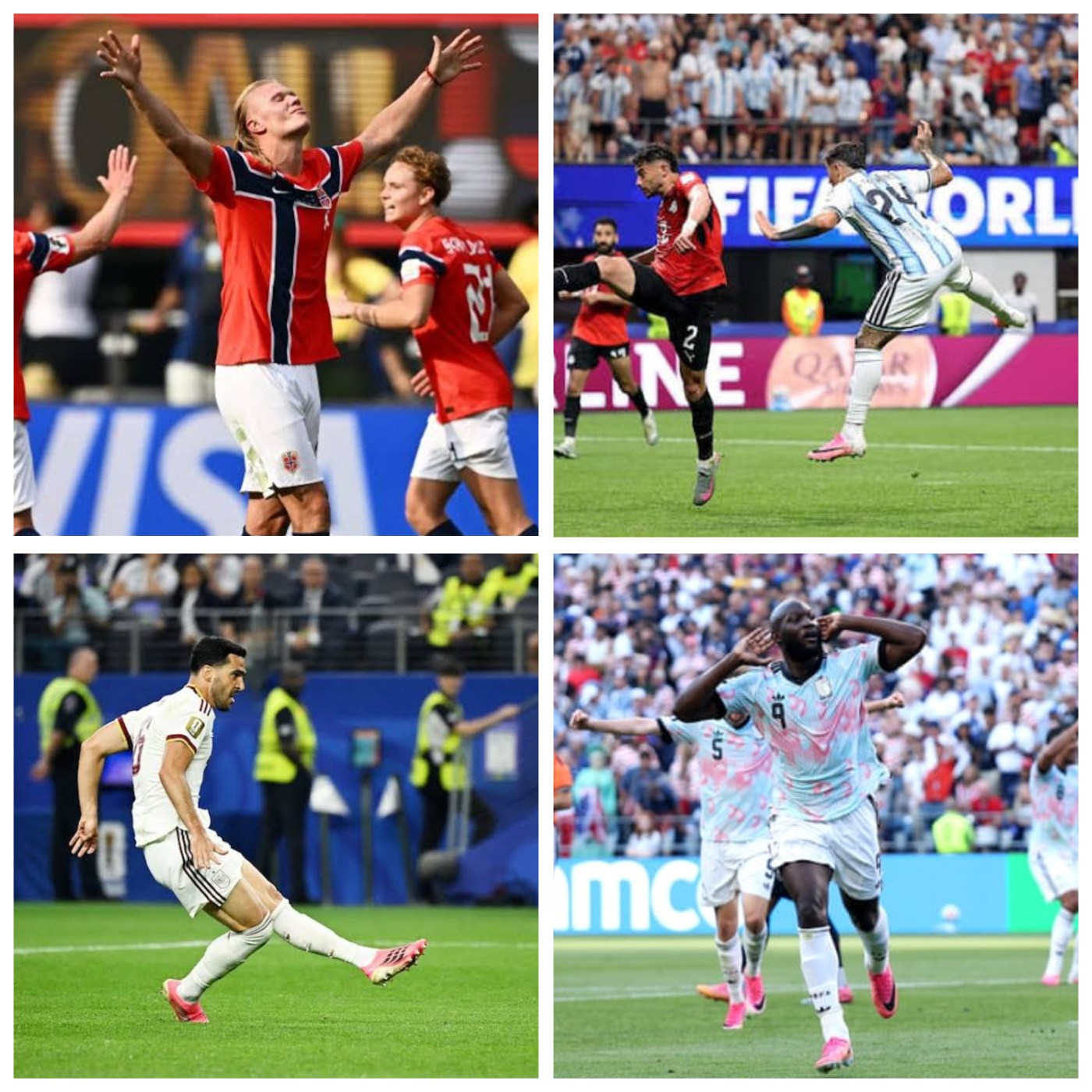
Norway’s 2-1 victory over Brazil was the result of the round. Brazil entered as favourites, but Norway did not treat the occasion as something merely to survive. They attacked with purpose, played with confidence and trusted the qualities that had carried them this far. Erling Haaland’s two goals completed one of the tournament’s defining upsets and sent Norway into the quarter-finals.
Egypt’s 3-2 defeat to Argentina deserves to be discussed alongside the round’s biggest stories, despite the result going against them. They took a 2-0 lead against the defending champions and fought with extraordinary courage before Argentina produced a dramatic late comeback.
Egypt will also leave feeling deeply unfortunate. Their players and staff protested two potential penalty incidents late in the game, including one shortly before Argentina’s winning goal. Whatever view is taken of the individual decisions, Egypt had legitimate reason to feel aggrieved after coming so close to a historic victory. Their tournament ended in defeat, but certainly not in disgrace.
Switzerland’s penalty shootout victory over Colombia was another significant result. After 120 goalless minutes, the Swiss held their nerve to win 4-3 from the spot and reach the last eight.
Star Players
Erling Haaland delivered the biggest individual performance of the round. Scoring twice to knock Brazil out of a World Cup is the kind of performance that defines an international career. Norway needed their biggest player on their biggest night, and Haaland delivered.
Azzedine Ounahi was outstanding in Morocco’s 3-0 victory over Canada. His two second-half goals transformed a tight contest and demonstrated why he remains so important to Morocco. Elegant in possession but increasingly decisive around the box, Ounahi was the central figure in another historic Moroccan night.
Jude Bellingham was magnificent against Mexico. His two quick goals helped England take control of an extraordinary match before Harry Kane added the third from the penalty spot. England still had to survive a frantic finish, but Bellingham’s influence on the biggest moments was undeniable.
Charles De Ketelaere produced his best performance of the tournament in Belgium’s 4-1 win over the United States. His two first-half goals gave Belgium control and showed exactly why he has been regarded as one of Europe’s most gifted attacking players.
Lionel Messi also belongs here. Argentina were staring at elimination against Egypt before their late revival, and Messi was again central to the recovery. In a chaotic match, his ability to influence decisive moments helped drag the holders back from the brink.
Ones to Watch
Norway are no longer simply an interesting outsider. Beating Brazil changes the way the rest of the tournament will view them. Haaland gives them an obvious threat, but their progress has been built on far more than one player.
Morocco also continue to look like genuine contenders. Their 3-0 win over Canada was patient rather than explosive. They remained calm through a tight first half before taking control after the break. This is now a team with deep tournament experience and very little fear.
Belgium may have finally found their rhythm. Their 4-1 win over the USA was easily their most convincing performance of the competition, with De Ketelaere, Hans Vanaken and Romelu Lukaku all scoring. Spain will represent a much greater test, but Belgium suddenly look dangerous.
Switzerland remain the tournament’s quiet survivors. They rarely dominate the conversation, but they defend intelligently, manage difficult moments and have now shown they can handle the pressure of a shootout.
Underachievers
Brazil are unquestionably the biggest disappointment. Losing to Norway is no longer as embarrassing as it might once have sounded, but Brazil are judged by different standards. Another World Cup has ended before the semi-finals, and the questions about how a country with so much individual talent continues to fall short will return.
Portugal’s exit was similarly frustrating. Their 1-0 loss to Spain was decided by Mikel Merino’s stoppage-time goal, but Portugal never consistently imposed themselves on the game. For a squad containing so much experience and attacking quality, the performance felt cautious.
The United States also leave with serious questions. A 4-1 home defeat to Belgium was a sobering end to a tournament that had generated considerable optimism.
The circumstances made it even more uncomfortable. Following Donald Trump’s reported intervention over Folarin Balogun’s red-card suspension, FIFA allowed the striker to be available against Belgium. The decision caused understandable concern about political influence over sporting governance. In the end, Belgium’s emphatic victory ensured the controversy did not alter the sporting outcome. For the credibility of the competition, that felt important.
Unsung Heroes
Mikel Merino deserves recognition for Spain. In a tense and largely cagey match against Portugal, he remained alert and arrived at exactly the right moment to score the stoppage-time winner. With Spain’s more glamorous attacking players attracting attention, Merino provided the decisive contribution.
Gregor Kobel was Switzerland’s key figure against Colombia. After two hours without a goal, he saved Cucho Hernández’s penalty in the shootout and gave Switzerland the advantage they needed to progress.
Ørjan Nyland also deserves credit for Norway. Haaland took the headlines against Brazil, but Nyland’s goalkeeping helped Norway survive the periods when Brazil inevitably applied pressure. Giant killings need goals, but they usually need saves as well.
Nayef Aguerd was another quietly excellent performer for Morocco. Canada competed well before Morocco took control, and Aguerd’s defensive composure helped ensure there was never a route back into the contest once the breakthrough arrived.
Final Takeaway
The Round of 16 changed the shape of the tournament.
Brazil and Portugal are gone. All three host nations have now been eliminated. Norway have moved from outsiders to genuine threats, while Morocco have once again shown that their previous World Cup run was no accident.
France continue to find ways to win. Spain remain composed. England have shown resilience. Argentina survived their biggest scare yet, although Egypt will leave wondering what might have happened had a few key decisions gone differently.
There was also a wider reminder from the USA-Belgium controversy. Football’s integrity depends on the rules being applied independently of political power, celebrity or influence. Whatever the intentions behind the intervention, the perception of political pressure around a disciplinary decision was unhealthy. Belgium’s emphatic win meant the controversy did not determine who progressed, and that was ultimately a good outcome for the sport.
Eight teams remain now. The margins are narrowing, the pressure is growing and, as Egypt discovered so painfully, a World Cup can turn in a matter of minutes.


Leave a Reply