
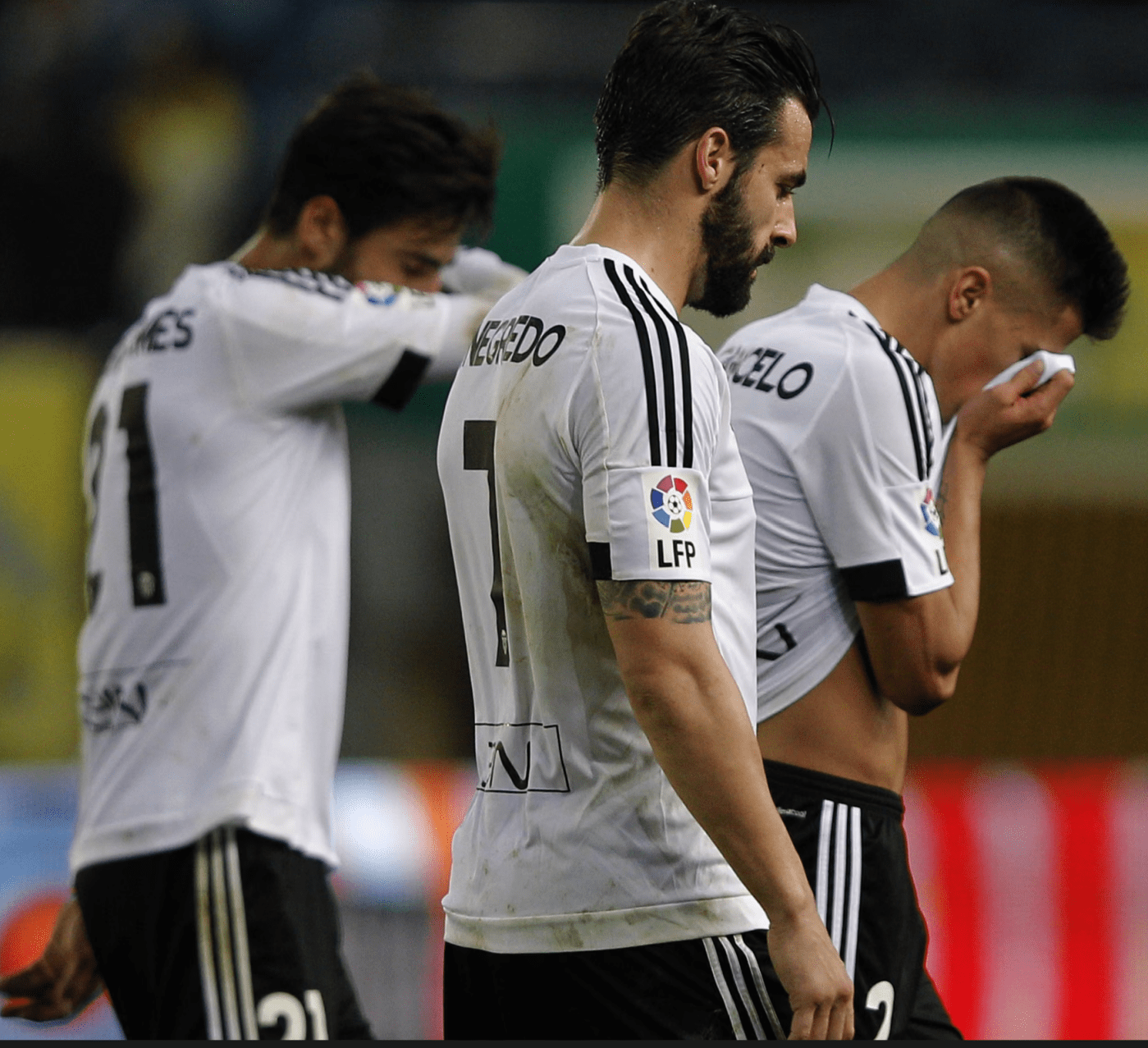
How One of Spain’s Great Clubs Lost Its Direction
Mestalla used to feel like one of European football’s great pressure chambers. The stands were steep, the noise was sharp and Valencia played with the kind of edge that made even richer teams uncomfortable. This was not a club content with being Spain’s third voice. At their best, Valencia made Real Madrid and Barcelona feel vulnerable.
At the beginning of the 2000s, Valencia were one of Europe’s most complete sides. They reached back-to-back Champions League finals in 2000 and 2001. Then, under Rafa Benítez, they became something even more impressive: a domestic title-winning machine.
Valencia won La Liga in 2001/02 and again in 2003/04. The second title came alongside the UEFA Cup, with Valencia beating Marseille 2-0 in Gothenburg. The club’s own history describes that 2004 triumph as the high point of a golden generation.
That team was not built on glamour alone. It was built on discipline. Santiago Cañizares gave them authority in goal. Roberto Ayala gave them defensive steel. David Albelda and Rubén Baraja gave them midfield bite. Pablo Aimar, Vicente, Mista and later David Villa gave them craft and incision.
Benítez turned Valencia into a side that could suffer, press, control space and punish mistakes. They were not always romantic, but they were ruthless. They played like a team with a plan in every zone of the pitch.
That is what makes the decline so frustrating. Valencia did not fall because they lacked football culture. They fell because the club lost the structure needed to protect it.
The first major issue was financial pressure. Valencia’s ambition in the 2000s came with heavy costs. The stalled Nou Mestalla project became a physical symbol of strategic drift: a half-finished future standing over a club increasingly trapped between memory and debt. El País reported that work on the new stadium restarted in January 2025 after being paralysed since 2009, with the project viewed as important to the club’s economic recovery.
Ownership then became the defining modern tension. Peter Lim’s takeover in 2014 was initially framed as a rescue act, but the following years brought supporter anger, player sales, managerial churn and a growing sense that the club’s football direction had become secondary to financial management. El País has continued to describe Valencia as a club facing sporting and institutional problems, while Spanish reporting has repeatedly highlighted supporter frustration with the Lim era.
The issue is not simply that Valencia sold good players. Many clubs sell. The problem is that Valencia repeatedly appeared to sell without building a convincing sporting cycle afterwards. David Silva, David Villa, Juan Mata, Jordi Alba, André Gomes, Paco Alcácer, Ferran Torres and others all left across the years. Some exits were unavoidable. Others deepened the feeling that Valencia had become a club unable to retain the players who should have formed its next identity.
That loss of continuity hurt the team on the pitch and the supporters emotionally. Valencia fans are demanding because they remember what the club was. They remember Champions League finals. They remember Benítez’s side winning titles. They remember Mestalla as a place where elite teams came to suffer.
Recent Valencia have too often existed in survival mode. There have been flashes: the 2019 Copa del Rey win was a reminder of the club’s size and emotional force. But one trophy could not disguise the deeper instability. Valencia stopped looking like a club with a long-term football plan.
The fall also shows how dangerous it is when a club loses connection with its city. Valencia are not a neutral sporting company. They are part of the identity of a football-mad region. When supporters feel ignored, every sale becomes a symbol, every defeat becomes a protest and every managerial change feels like another sign of drift.
Rafa Benítez’s departure in 2004 now feels even more symbolic. UEFA reported that he resigned shortly after the double-winning season, while The Guardian described him breaking down in tears as he confirmed his exit. The manager who had given Valencia their clearest modern identity left at the summit. The club has spent much of the time since trying to rediscover that level of clarity.
The way back is not impossible, but it requires honesty. Valencia need stable sporting leadership, a properly resourced recruitment model, stronger protection of academy talent, a credible stadium resolution and ownership that reconnects with supporters rather than treating them as background noise.
Valencia’s decline hurts because the club had already proved it could compete with giants. It had the stadium, the academy, the city, the tactical tradition and the European credibility. This was not a fantasy project. It was real.
The badge is still heavy. Mestalla still matters. The supporters still care with a ferocity few clubs can match. But Valencia will not return through nostalgia alone. They need structure, trust and a football plan worthy of the memories they are carrying.
Sources
Valencia CF official history of the 2004 UEFA Cup win; UEFA report on Rafa Benítez leaving Valencia; The Guardian reporting on Benítez’s departure; El País reporting on Nou Mestalla and Valencia’s institutional issues.
 FourFiveOne
Leave a comment