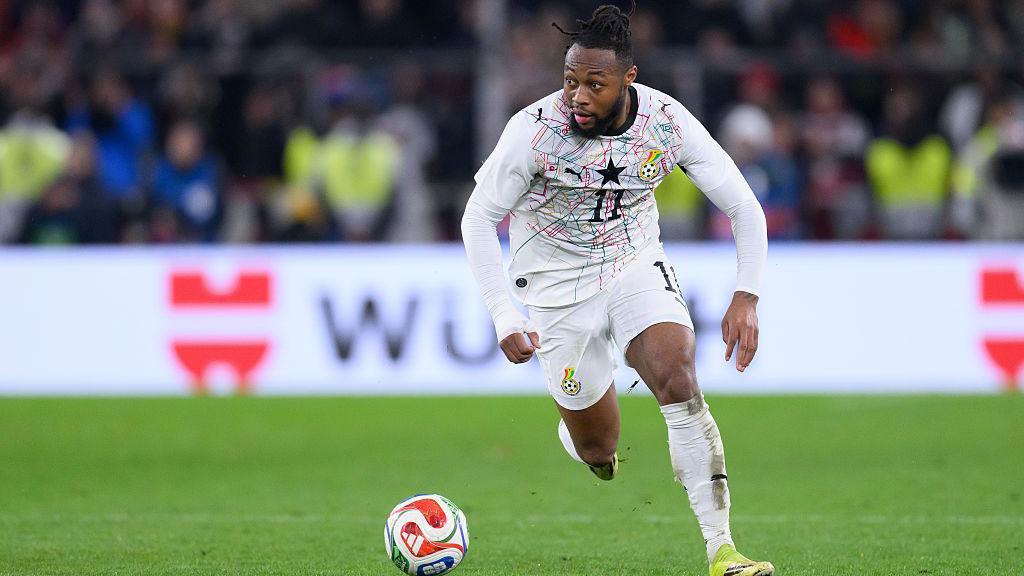
Ghana’s qualification for the 2026 FIFA World Cup was not merely a return to football’s biggest stage. It was a necessary act of recovery.
Following a deeply disappointing period that included group-stage elimination at the 2023 Africa Cup of Nations and failure to qualify for the 2025 edition, confidence in the Black Stars had fallen sharply. The team appeared caught between generations: no longer powered by the established core that carried Ghana through the 2006, 2010 and 2014 World Cups, but not yet settled enough to build around its newer talent.
World Cup qualification changed the mood.
Ghana finished top of CAF qualifying Group I with 25 points from ten matches, recording eight victories, one draw and one defeat. The Black Stars scored 23 goals and conceded only six, finishing ahead of Madagascar, Mali, Comoros, the Central African Republic and Chad.[1]
It was an authoritative statistical record, although the campaign was not always as comfortable as the final table suggested.
Now, with Ghana preparing to face Panama, England and Croatia in Group L, the challenge is very different. The opposition is stronger, important players are missing through injury, and Carlos Queiroz has been appointed shortly before the tournament to replace the coach who secured qualification.
Ghana therefore arrive at the World Cup as one of its most intriguing outsiders: talented enough to trouble strong teams, but carrying enough weaknesses to make an early exit equally plausible.
A Qualification Campaign Built on Recovery
Ghana began their qualifying journey in November 2023 with a narrow 1–0 victory over Madagascar. It was a laboured performance, settled late, and any early optimism was checked days later when Comoros defeated the Black Stars 1–0.
At that point, Ghana’s qualification campaign already appeared vulnerable.
The response proved decisive.
In June 2024, Ghana produced one of the most important results of the campaign by beating Mali 2–1 away from home. The Black Stars then defeated the Central African Republic 4–3 in Kumasi, surviving a chaotic match that demonstrated both their attacking quality and their defensive fragility.
The real turning point came in March 2025.
Ghana demolished Chad 5–0 in Accra before beating Madagascar 3–0 away. Those two performances restored authority to the campaign and established the Black Stars as the strongest team in the group.
A frustrating 1–1 draw away to Chad later interrupted their momentum, but Ghana responded by defeating Mali 1–0 and then overwhelming the Central African Republic 5–0. A final 1–0 victory over Comoros secured qualification and confirmed top spot.[1]
Across the ten matches, Ghana showed several characteristics that will remain important at the World Cup:
- They could score through different players and different types of attacks.
- They carried considerable threat in transition.
- They became increasingly effective at set pieces.
- They generally controlled weaker opponents once they scored first.
- Their defensive structure improved significantly during the second half of the campaign.
The one defeat, away to Comoros, and the draw with Chad also offered warnings. Ghana sometimes struggled against compact opponents, lacked urgency when dominating possession and could become vulnerable when their full-backs advanced simultaneously.
Qualification was deserved, but it did not prove Ghana had solved every underlying problem.
Otto Addo Built the Platform, but Carlos Queiroz Must Now Adapt It
Otto Addo deserves considerable credit for guiding Ghana through qualification.
His preferred structure was generally based around a 4–2–3–1, although the shape could become a 3–4–3 in possession. One defender or holding midfielder would remain deeper during the build-up, allowing the full-backs to advance and giving Ghana greater width.[2]
Mohammed Kudus frequently operated between midfield and attack, while Antoine Semenyo, Jordan Ayew and Ghana’s wide players stretched the defensive line. Thomas Partey provided progression from deeper positions, either through vertical passes or switches into the wide areas.
However, Addo will not lead the team at the tournament.
Following a poor sequence of results after qualification, Ghana appointed the vastly experienced Carlos Queiroz shortly before the World Cup.[3] The former Portugal and Iran coach has inherited a team assembled around another manager’s principles and has had very little preparation time.
That makes tactical continuity unlikely.
Queiroz is traditionally more conservative than Addo. His international teams have generally prioritised defensive organisation, physical compactness and rapid counter-attacks rather than prolonged possession. Ghana are therefore likely to retain elements of their 4–2–3–1 structure while defending in a narrower and more cautious shape.
The Black Stars may still begin matches in a nominal 4–2–3–1, but without the ball it could resemble a 4–4–1–1 or 4–5–1.
Against England and Croatia, expect Ghana to:
- Defend primarily in a compact middle block.
- Reduce space between midfield and defence.
- Allow the opposition some possession in less dangerous areas.
- Press selectively rather than continuously.
- Attack quickly through the channels after regaining the ball.
- Use Semenyo’s strength and speed as their principal outlet.
This will probably be a more pragmatic Ghana than the one seen during sections of the qualifying campaign.
That may disappoint supporters who want the Black Stars to impose themselves, but it is understandable. Queiroz has inherited an injury-hit squad shortly before facing two of Europe’s most experienced tournament teams. Ghana’s best route to progression is likely to be discipline first, expression second.
The Mohammed Kudus Absence Changes Everything
The greatest blow to Ghana’s preparations is the absence of Mohammed Kudus.
Kudus was ruled out after failing to recover from a serious quadriceps injury. He had been Ghana’s most naturally creative attacking player, capable of receiving under pressure, carrying the ball through midfield and creating chances without requiring an organised passing move.[4]
His absence leaves Ghana without their most effective link between midfield and attack.
Kudus provided several tactical solutions simultaneously. He could play as a number ten, move in from the right, collect the ball deep or carry Ghana up the pitch during transitions. He was also one of the few players in the squad capable of beating multiple opponents in crowded central areas.
Without him, Ghana may become more direct.
Rather than progressing through a central creator, the Black Stars are likely to play earlier passes towards Semenyo, use the pace of Kamaldeen Sulemana, Ernest Nuamah or Abdul Fatawu Issahaku, and rely more heavily on second balls.
Replacing Kudus cannot be the responsibility of one player. Ghana must compensate collectively.
Antoine Semenyo: Ghana’s Most Important Attacker
With Kudus unavailable, Antoine Semenyo becomes Ghana’s primary attacking weapon.
Semenyo gives the Black Stars qualities that are especially useful at international tournaments. He is powerful, direct, comfortable attacking from different positions and capable of carrying the ball over long distances. He can play through the centre, begin from the left or move across the front line.
Against England and Croatia, Ghana may spend extended periods without the ball. Semenyo’s ability to receive direct passes, hold off defenders and turn defensive clearances into attacks will therefore be critical.
He will not simply be judged on goals.
His job may include winning fouls, moving Ghana up the field, occupying two centre-backs and creating space for runners advancing from midfield. When Ghana defend deeply, he may initially appear isolated. The speed with which teammates support him could determine whether Ghana’s counter-attacks become genuine chances or simply surrender possession.
Semenyo is the player most capable of turning an otherwise controlled match into an unpredictable one.
Thomas Partey and the Battle for Midfield Control
Thomas Partey remains Ghana’s most experienced central midfielder and one of the squad’s most important tactical players.
When fit and in rhythm, Partey can receive from the centre-backs, resist pressure and break lines with his passing. His positional discipline will be especially important if Ghana use a double pivot.
Against Panama, Ghana may expect Partey to dictate possession and move the ball into attacking areas. Against England and Croatia, his role is likely to be more defensive: protecting the centre, tracking runners and ensuring Ghana are not repeatedly exposed in front of their back four.
The concern is mobility.
If Ghana’s midfield becomes stretched, Partey and his partner could struggle to cover large spaces. Queiroz will therefore want the wide players to recover quickly and the defensive line to remain connected to midfield.
Elisha Owusu, Kwasi Sibo and Caleb Yirenkyi offer different supporting qualities, but Ghana do not possess an obvious direct replacement for Kudus’ creativity. Their midfield may be functional and competitive without being consistently inventive.
The Wide Players Must Provide the Creativity
Kudus’ absence places greater responsibility on Ghana’s group of wide attackers.
Kamaldeen Sulemana offers pace and one-against-one ability. Abdul Fatawu Issahaku can create from the right and cut inside onto his stronger left foot. Ernest Nuamah provides direct running, while Christopher Bonsu Baah offers another energetic option.
There is talent in this group, but also inconsistency.
Ghana’s wingers must make better decisions in the final third. Too often, promising attacks have ended with an unnecessary dribble, a delayed pass or a poor final delivery. At World Cup level, Ghana may receive only a small number of counter-attacking opportunities. Those moments cannot be wasted.
The wide players must also defend.
Against England, Ghana’s wingers may spend considerable time supporting their full-backs. Against Croatia, they will need to track rotations between the opposing midfielders and wide defenders. Queiroz is unlikely to select wide players purely for attacking flair if they cannot maintain the defensive shape.
Defensive Strength—and Significant Injury Concerns
Ghana’s defensive record in qualification was encouraging. Six goals conceded across ten matches represented clear improvement, while five of their final six qualifiers ended in clean sheets.
However, the World Cup defence will not be the same one that completed qualification.
Mohammed Salisu has been ruled out after suffering a serious knee injury, while Alexander Djiku was also withdrawn from the final squad following an injury in training.[5] The loss of both established centre-backs creates a major problem.
Ghana must now rely on combinations involving players such as Jerome Opoku, Abdul Mumin, Derrick Luckassen, Jonas Adjetey and Kojo Peprah Oppong. Several are capable defenders, but the partnerships are comparatively untested at this level.
That uncertainty will influence Queiroz’s approach.
Ghana are unlikely to defend with an extremely high line against England’s pace or Croatia’s movement. They may instead protect their centre-backs by remaining deeper, narrowing the space around the penalty area and asking the midfield to screen passes into the forwards.
Alidu Seidu’s aggression and versatility could be valuable at right-back or centre-back. Gideon Mensah offers energy on the left, while Baba Rahman brings experience after returning to the squad.
The danger will come from crosses, set pieces and defensive communication. A newly assembled back line cannot afford hesitation when deciding whether to step forward, hold position or track runners.
The Goalkeeping Question
Goalkeeper remains one of Ghana’s least settled positions.
Lawrence Ati-Zigi, Benjamin Asare and Joseph Anang were selected in the final squad, but none enters the tournament as an undisputed, internationally established number one.[5]
Queiroz must decide whether he values experience, shot-stopping or distribution most highly.
Because Ghana may concede territory against England and Croatia, the goalkeeper will need to command the penalty area and deal reliably with crosses. Ghana cannot afford uncertainty from routine deliveries, particularly when their centre-back pairing is already disrupted.
Good tournament teams often have a goalkeeper who earns points in close matches. Ghana do not necessarily require spectacular performances, but they need stability.
Ghana’s Major Strengths
Ghana’s strongest quality is their athleticism in transition.
Semenyo, Kamaldeen, Fatawu and Nuamah can move the ball forward quickly. If Ghana regain possession while the opposition’s full-backs are advanced, they have the pace to exploit open space immediately.
Their second major strength is physical competitiveness. Ghana can challenge for duels, attack crosses and make matches uncomfortable. Against technically stronger opponents, they must turn games into physical and psychological contests rather than allow a calm passing rhythm to develop.
The Black Stars also carry a useful set-piece threat. Defenders such as Opoku and Mumin provide aerial presence, while Ayew and Fatawu can deliver from dead-ball situations. In tightly contested tournament matches, set pieces may be Ghana’s most realistic source of goals.
Finally, Ghana possess emotional resilience. The qualifying campaign included difficult away matches, pressure from previous failures and moments when the team’s direction was heavily questioned. They recovered each time.
Ghana’s Main Weaknesses
The greatest concern is creativity through the centre.
Without Kudus, Ghana may struggle to unlock an organised low block. This is especially relevant against Panama, the match Ghana are most likely expected to win. Panama may be willing to concede possession and challenge Ghana to construct attacks patiently.
Ghana’s second weakness is the instability within the defensive unit. Losing Salisu and Djiku removes experience, chemistry and composure. England and Croatia will attempt to test that uncertainty through movement between the centre-backs and full-backs.
The third problem is control.
Ghana can become too open when chasing a goal. Their midfield has occasionally been bypassed, leaving the defence exposed to direct attacks. At the World Cup, Queiroz must prevent emotional momentum from destroying the team’s shape.
There is also the question of preparation. Queiroz has arrived very late. He is attempting to introduce new principles while learning the personalities, strengths and limitations of his squad. Ghana may improve as the competition progresses, but the opening match leaves little room for experimentation.
The Panama Match Will Define Ghana’s Tournament
Ghana begin against Panama in Toronto on 17 June before facing England on 23 June and Croatia on 27 June.[6]
The first match is fundamental.
A victory over Panama would place Ghana in a strong position because the expanded format sends the top two teams in each group, together with the eight best third-placed teams, into the round of 32.[7]
Four points may therefore be sufficient to advance, while even three points could keep Ghana in contention depending on goal difference and results elsewhere.
A draw against Panama, however, would create immediate pressure. Ghana would then probably need a result against England or Croatia. A defeat would make progression extremely difficult.
Ghana must approach Panama with controlled aggression. They cannot play with the same deep, reactive shape they may use against England. They will need to take greater responsibility for possession, sustain attacks and create through combinations rather than counters alone.
This tactical contrast may be one of Ghana’s biggest challenges. They must be capable of playing one way against Panama and another against the group’s European heavyweights.
How Are Ghana Likely to Fare?
Ghana should not be considered favourites to progress, but neither are they without a credible route into the knockout stage.
England possess superior individual quality and depth. Croatia remain tactically experienced, technically secure and extremely comfortable in tournament football. Panama are organised, physical and capable of punishing any complacency.
A realistic target is four points.
That would probably require beating Panama and drawing with either England or Croatia. Ghana could also progress with three points, but relying on the ranking of third-placed teams would introduce significant uncertainty.
The most likely range of outcomes extends from third place with three or four points to elimination after a competitive but inconsistent group campaign.
Reaching the round of 32 would represent a successful tournament, particularly given the injuries, managerial change and strength of the group. Progressing beyond that stage would be a major achievement.
Ghana do not currently possess the balance or depth of the 2010 team. They should not be burdened with the expectation of repeating that historic quarter-final run.
But they are capable of producing an upset. Their pace can trouble ageing or aggressive defensive lines. Their physicality can disrupt stronger teams. Their set pieces can change close matches, and the expanded format gives them a greater margin for survival than in previous World Cups.
Source notes
[1] Qualification record: Ghana completed Group I with 25 points from ten matches. The eight-win, one-draw, one-defeat record and 23–6 aggregate are calculated from the ten published results.
[2] Qualification tactics: The Ghana FA described Otto Addo’s system as a flexible 4–2–3–1 that could become a 3–4–3 in possession.
[3] Coaching change: Carlos Queiroz replaced Otto Addo shortly before the tournament and signed a short-term contract to lead Ghana at the World Cup.
[4] Kudus injury: Mohammed Kudus was omitted after failing to recover from a quadriceps injury.
[5] Final squad and defensive injuries: Mohammed Salisu missed the squad with an ACL injury, while Alexander Djiku was replaced after being injured in training.
[6] Fixtures: Ghana face Panama on 17 June, England on 23 June and Croatia on 27 June.
[7] Tournament format: The top two teams from each group and the eight best third-placed teams advance to the round of 32.


Leave a Reply