
The second round of World Cup group games is where tournaments usually start to reveal themselves. Opening matches can be nervous, chaotic and misleading. By game two, the excuses begin to disappear. Teams either build momentum, recover from early setbacks, or start to feel the pressure of an early exit closing in.
Across the groups, the second round delivered statement wins, tactical reminders and quietly significant results. Some favourites moved through the gears. Others were dragged into awkward battles. A few outsiders showed they are not here just to make up the numbers.
Surprise Results
England’s 0-0 draw with Ghana was one of the standout results of the round. England had opened with a 4-2 win over Croatia and looked capable of blowing teams away, but Ghana’s discipline, physicality and defensive control turned the game into something far more uncomfortable. It was not a result that badly damaged England, but it did remind everyone that tournament football rarely follows reputation.
Belgium’s 0-0 draw with Iran was another telling result. Belgium have attacking pedigree, but Iran frustrated them, limited space between the lines and turned the match into a slow grind. For Belgium, it raised old concerns about tempo and cutting edge. For Iran, it was a mature tournament result.
Uruguay’s 2-2 draw with Cape Verde was one of the more entertaining surprises. Uruguay would have expected control, but Cape Verde showed courage, attacking ambition and enough quality to keep themselves alive in the group. In this format, that point could become huge.
Morocco’s 1-0 win over Scotland also deserves mention. Not because Morocco winning is a shock anymore, but because of how efficiently they did it. They turned a tight game into three points and reinforced their reputation as one of the most tactically reliable tournament sides around.
Star Players
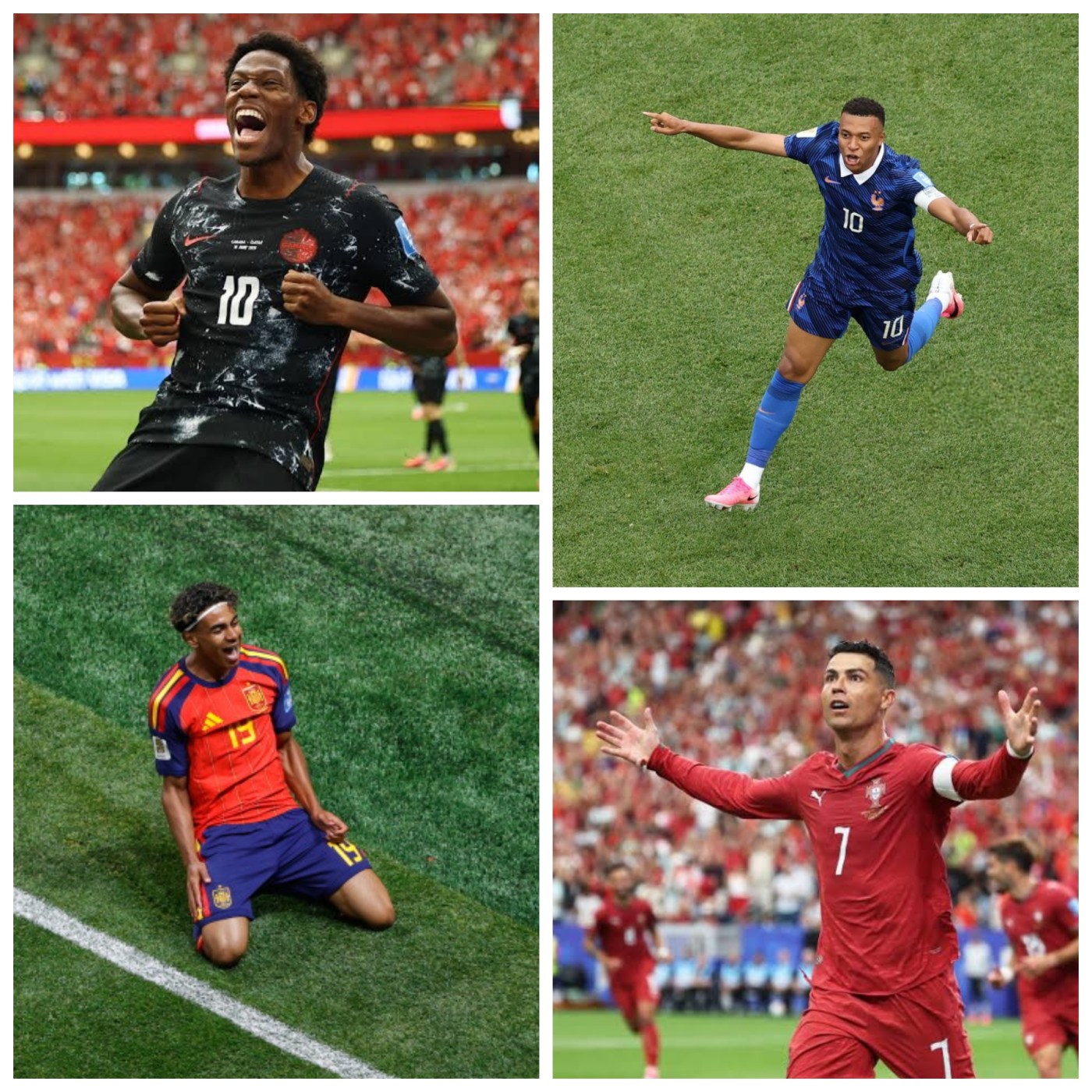
Jonathan David delivered one of the defining individual performances of the second round, scoring a hat-trick in Canada’s 6-0 win over Qatar. For Canada, it was more than a heavy victory; it was a historic World Cup moment on home soil. David has long carried the reputation of being Canada’s most reliable finisher, and this was the kind of ruthless tournament display that turns reputation into legacy.
Cristiano Ronaldo gave Portugal another major individual headline in the 5-0 win over Uzbekistan. After Portugal’s flat opening draw with DR Congo, they needed authority, and Ronaldo provided the kind of decisive penalty-box presence that has defined so much of his international career.
Lionel Messi produced another piece of World Cup history in Argentina’s 2-0 win over Austria, scoring twice as the defending champions moved towards the knockout rounds. The remarkable part is not just that Messi is still decisive, but that Argentina still look emotionally and tactically built around his moments of control.
Kylian Mbappé was central again for France, scoring twice in their 3-0 win over Iraq. France have looked one of the most balanced sides in the tournament so far, but Mbappé remains the difference-maker: explosive in space, ruthless in front of goal and capable of turning control into scoreboard pressure.
For the Netherlands, Brian Brobbey and Cody Gakpo both stood out in the 5-1 win over Sweden. Brobbey’s early goals gave the Dutch control, while Gakpo’s second-half double helped turn a strong result into a warning shot.
Spain also had two key performers in Lamine Yamal and Mikel Oyarzabal. Yamal gave their 4-0 win over Saudi Arabia spark and width, while Oyarzabal added the finishing touch with two goals. In tournaments, Spain can sometimes overplay; players like Oyarzabal matter because they turn possession into damage.
Ones to Watch
Norway are becoming one of the tournament’s most interesting teams. Their 3-2 win over Senegal followed a 4-1 win against Iraq, giving them two victories and seven goals from two matches. They look direct, confident and dangerous in transition.
Japan also bounced back impressively, beating Tunisia 4-0 after drawing with the Netherlands. That result showed their opening performance was not a one-off. Japan have technical security, speed in wide areas and the tactical intelligence to adapt.
Canada’s 6-0 win over Qatar was one of the round’s most eye-catching results. After drawing with Bosnia and Herzegovina, they needed a response and produced one with authority. The scoreline may also become important if goal difference decides the group.
Colombia continued their strong start with a 1-0 win over DR Congo after beating Uzbekistan in the opener. It was not spectacular, but it was mature. Tournament teams need those kinds of wins.
Ghana are also worth watching. A win over Panama followed by a draw with England puts them in a strong position. More importantly, they look like a team with a clear identity: compact, physical, organised and dangerous when given space.
Underachievers
Belgium remain difficult to read. Two draws from two games against Egypt and Iran is not disastrous, but it is underwhelming. The issue is not just the points total; it is the lack of attacking authority. Belgium are still alive, but they look more functional than frightening.
Sweden’s 5-1 defeat to the Netherlands was one of the most damaging results of the round. Their opening win over Tunisia had put them in a strong position, but this result exposed defensive fragility and raised questions about whether they can handle elite-level movement and tempo.
Croatia recovered with a 1-0 win over Panama, but their tournament still feels slightly uneasy after losing 4-2 to England in the opener. They have the experience and technical base to progress, but the rhythm has not fully clicked yet.
Senegal are in danger. Losing 3-1 to France was understandable; losing 3-2 to Norway leaves them with work to do. They have competed well in spells, but tournament football can be brutal when good performances do not become points.
Turkey are also under pressure. A 2-0 defeat to Australia followed by a 1-0 defeat to Paraguay means they are still searching for their first goal and first point.
Unsung Heroes
Not every standout performance comes with a goal celebration or headline image. Some of the most important players of the second round were those doing the hard, intelligent work that allowed their teams to survive difficult moments.
Jerome Opoku was excellent for Ghana in the 0-0 draw with England. Against an England side full of attacking names, Opoku defended with calmness, strength and concentration. He helped protect the penalty area and gave Ghana the kind of defensive authority that made the result feel earned rather than fortunate.
Jonas Adjetey also deserves recognition from the same Ghana performance. Alongside Opoku, he played with maturity beyond the noise of the occasion. England had plenty of the ball, but Ghana’s centre-backs rarely looked overwhelmed.
Alireza Beiranvand was Iran’s hero in the 0-0 draw with Belgium. Belgium had the names, the possession and the expectation, but Beiranvand gave Iran security. His presence, shot-stopping and command of the box turned a difficult assignment into a major tournament point.
Matías Galarza may not be one of the tournament’s household names, but his early goal for Paraguay against Turkey was enormous. It gave Paraguay something to protect, shifted pressure onto Turkey immediately and helped deliver a result that kept their campaign alive.
Nathan Saliba also deserves a mention for Canada. Jonathan David rightly took the spotlight with his hat-trick against Qatar, but Saliba’s impact from the bench added another layer to Canada’s big win. His free-kick goal helped turn a strong result into a statement scoreline.
Final Takeaway
The second round has created a clearer picture, but not a settled one. France, Argentina, Portugal, the Netherlands, Germany, Spain, Canada and the United States all look well placed. Some have been dominant, others controlled, but each has shown enough to suggest they are building momentum.
At the same time, teams like Norway, Ghana, Morocco, Japan and Colombia are proving that this tournament will not be shaped by reputation alone. They have structure, confidence and enough quality to make bigger nations uncomfortable.
For others, the warning signs are obvious. Belgium need more incision. Senegal need points quickly. Turkey need goals. Sweden need a reset. Croatia still need to find their best version.
That is what makes the second round so important. It does not decide everything, but it exposes plenty. The opening nerves are gone now. The third round is where the pressure becomes ruthless.


Leave a Reply