
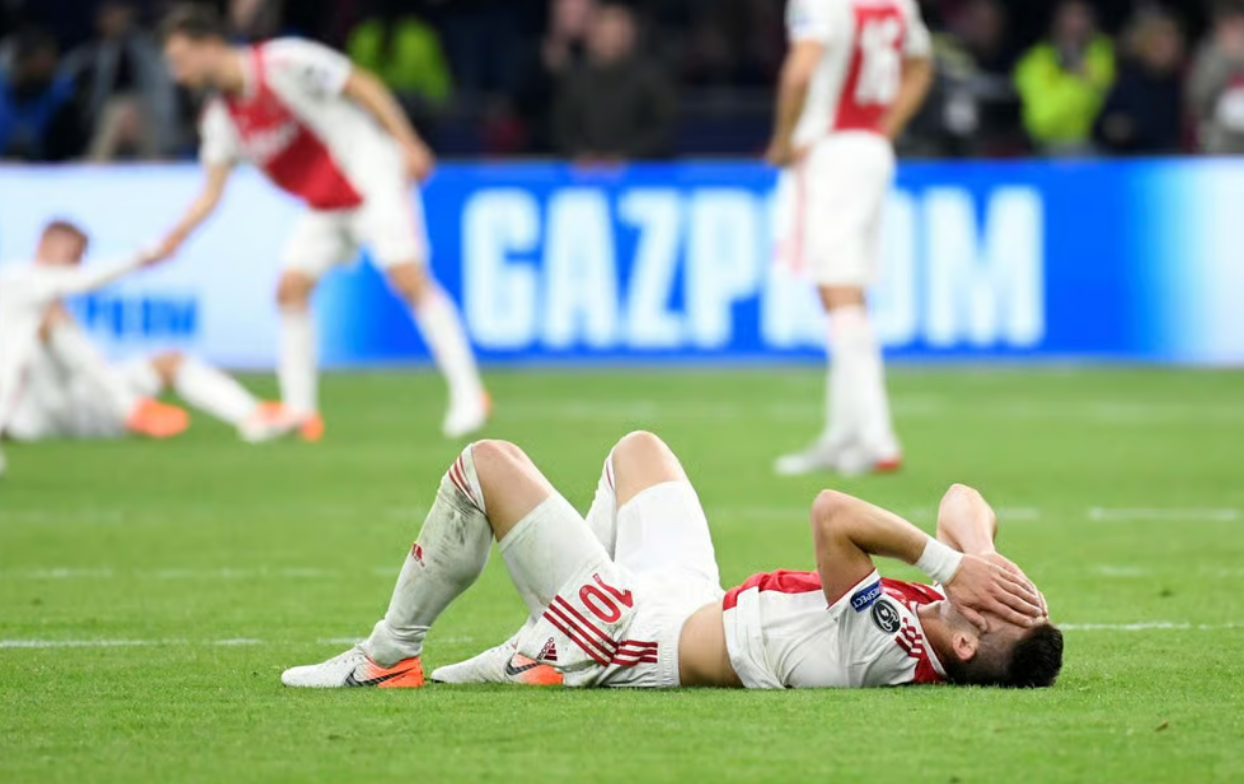
The Fall of Europe’s Great Talent Factory
Ajax were never supposed to be just another football club. They were a football school, a philosophy, a red-and-white argument that intelligence could beat excess. In Amsterdam, football was not simply played; it was taught, shaped, repeated and passed down. From Johan Cruyff to Marco van Basten, Dennis Bergkamp to Clarence Seedorf, Wesley Sneijder to Frenkie de Jong, Ajax built one of the most recognisable identities in world football.
That is why their recent decline has felt so unsettling. It was not just that Ajax lost matches. It was that Ajax, for a period, stopped looking like Ajax.
For decades, the club’s strength came from clarity. Ajax knew what kind of football it wanted to play, what kind of player it wanted to produce and what kind of coach could connect the academy to the first team. The great sides of the 1970s made Total Football famous. The 1995 Champions League winners gave Europe a modern academy masterpiece. Then, in 2018/19, Erik ten Hag’s side seemed to bring the old idea back to life.
That team was thrilling because it felt both nostalgic and modern. Matthijs de Ligt gave it authority, Frenkie de Jong gave it rhythm, Hakim Ziyech gave it imagination, Dušan Tadić gave it senior intelligence and Donny van de Beek gave it timing between the lines. Ajax went to the Bernabéu and dismantled Real Madrid. They beat Juventus. They came seconds from a Champions League final.
For a moment, it felt like Ajax had found the formula again: sell players, yes, but build faster than the market could weaken you.
Then the structure cracked.
The fall did not come from one bad transfer window or one poor manager. It came from the weakening of several pillars at once. Marc Overmars left as director of football in 2022 after Ajax confirmed his immediate departure following inappropriate messages to female colleagues. Overmars himself said: “Certainly for someone in my position, this behaviour is unacceptable.” The issue was far bigger than football, but in football terms it also removed a key architect of the modern Ajax recruitment model.
That same year, Ten Hag left for Manchester United. Suddenly, Ajax had lost both the coach who gave the team its tactical identity and the executive who had helped shape the squad-building model. A club that depends on alignment between academy, recruitment and first-team coaching cannot absorb that kind of disruption easily.
The consequences were brutal. Ajax still bought players, still sold players and still talked like Ajax, but the machine no longer looked coherent. Recruitment became more erratic. Coaching appointments failed to settle. Senior leadership changed too often. The team lost the balance between youth and experience that had made the best Ajax sides so compelling.
The 2023/24 season became the symbol of decline. Ajax finished fifth in the Eredivisie, a humiliating outcome by their standards, and their defensive record was miles away from what a dominant Dutch side should produce. FBref recorded Ajax’s 2023/24 league campaign at 56 points, with 15 wins, 11 draws and 8 defeats.
The numbers mattered, but the mood mattered more. Ajax had become vulnerable in a way that felt alien. Opponents no longer looked intimidated. The Johan Cruyff Arena no longer felt like the headquarters of a system that knew itself better than anyone else. The academy still had talent, but young players were being introduced into turbulence rather than stability.
That is the real danger for Ajax. Their model has always involved selling players. That part is not new. What changed was the club’s ability to replace talent within a clear football structure. Ajax used to sell from strength. Recently, too often, they looked like a club selling parts from a machine they no longer fully understood.
Louis van Gaal’s return as an advisor in 2023 captured the seriousness of the situation. “I want to help Ajax,” he said. “I’d like to bring in my football knowledge. We must find the way up again.”
That quote matters because it frames the decline properly. Ajax do not need reinvention. They need restoration. The way back is not to become a mini-Premier League club or chase short-term spending. The way back is to rebuild the structure that once made them different.
They need a stable sporting director, a coach aligned with the club’s principles, more disciplined recruitment, better succession planning and a first team that gives academy players a reliable environment to grow. Ajax must support youth rather than hide behind it.
The tragedy of Ajax’s decline is that it damaged one of football’s great ideas. But the hope is that the idea still exists. The academy still matters. Amsterdam still produces footballers. The shirt still carries meaning. Ajax have fallen before and risen before.
The challenge now is not simply to win the Eredivisie again. It is to make the club feel like a system again — not a collection of talented parts, but a football institution with a memory, a method and a future.
Sources
Ajax official statement / The Guardian reporting on Marc Overmars’ departure; Ajax / NOS reporting on Louis van Gaal’s advisory role; FBref 2023/24 Ajax statistics; ESPN / The Guardian analysis of Ajax’s post-2019 instability.


Leave a Reply