
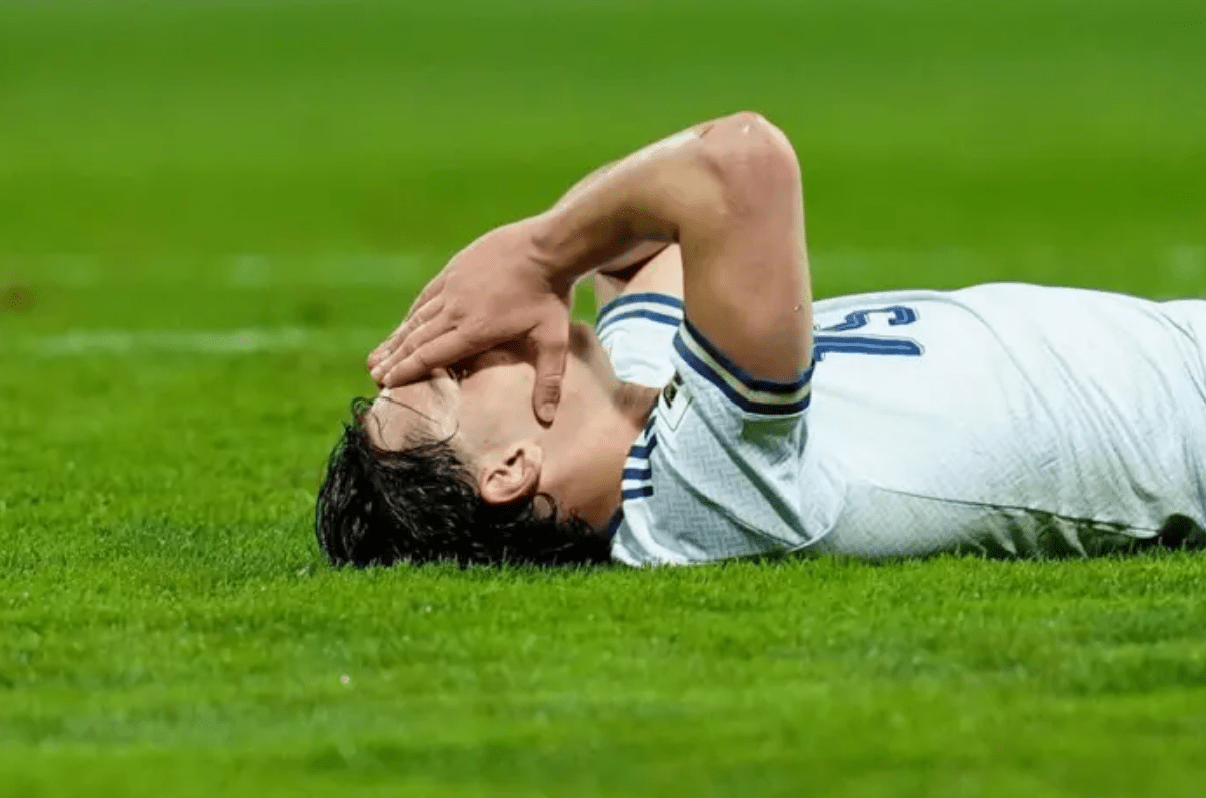
Italian football did not fall from grace quietly. It slipped, argued, denied, briefly revived, then slipped again. For decades, calcio carried itself like a kingdom: tactically superior, culturally heavyweight, technically refined and defensively untouchable. Italy was not just another football nation. It was one of the game’s great reference points.
The Azzurri won World Cups in 1934, 1938, 1982 and 2006. Serie A, particularly from the late 1980s through the early 2000s, was the destination league. The best players went to Italy not as a stepping stone, but as the summit. Diego Maradona, Marco van Basten, Ruud Gullit, Lothar Matthäus, Zinedine Zidane, Ronaldo, Gabriel Batistuta, Pavel Nedvěd, Andriy Shevchenko, Francesco Totti, Alessandro Del Piero, Paolo Maldini, Javier Zanetti and Roberto Baggio all helped build the mythology.
The league was glamorous, brutal and intelligent. Matches felt like chess played at knife-point. Tactical detail mattered. Defending was treated as an art form. The No. 10 still had room to dream. The centre-back was not merely a stopper but a reader of space, an organiser, a symbol of authority.
Now, the picture is very different. Italy, once a four-time world champion, has missed three consecutive World Cups. Serie A remains fascinating, romantic and tactically rich, but it no longer sits at the top of football’s financial or competitive pyramid. Italian clubs can still produce strong European runs, but they operate with less money, older infrastructure and a narrower talent pipeline than their biggest rivals.
This is not the death of Italian football. But it is the decline of Italian football as a global superpower.
From Football’s Finishing School to Football’s Second Tier
To understand the scale of the fall, you have to remember the height.
In the 1990s, Serie A was football’s Hollywood. Channel 4’s Football Italia exported the league’s mystique to a generation of fans. AC Milan were Europe’s tactical and aesthetic standard. Juventus were relentless. Inter were star-studded. Parma, Lazio, Roma, Fiorentina and Sampdoria had squads that would now look absurdly deep by modern standards.
Italian clubs dominated European competitions. Milan reached Champions League finals with frightening regularity. Juventus were a constant continental presence. Parma and Lazio won European trophies. Even clubs outside the traditional giants could sign players of serious global stature.
Domestically, Serie A had both money and prestige. Internationally, Italy had identity. The national team could suffer tournament heartbreak, as in 1994 and 2000, but it still belonged in the deepest stages of elite competition. The 2006 World Cup win felt like a final confirmation of Italy’s place in football history: Buffon, Cannavaro, Nesta, Pirlo, Gattuso, Totti, Del Piero, De Rossi, Zambrotta — a generation with technique, intelligence, arrogance and steel.
Yet that triumph also disguised what was coming.
Calciopoli and the Loss of Trust
The 2006 Calciopoli scandal did not single-handedly destroy Italian football, but it accelerated the damage. Juventus were relegated to Serie B. Titles were stripped. The reputation of Serie A, already dealing with financial and infrastructural concerns, was hit hard.
The scandal mattered because football is not built only on results. It is built on credibility. Serie A had once sold itself as the most sophisticated league in the world. Calciopoli made it look compromised, political and rotten behind the curtain.
The timing was brutal. Just as the Premier League was expanding into a global entertainment product, Italy was fighting internal fires. England modernised its stadiums, broadcast model and international branding. Spain benefited from the Messi-Ronaldo era, the global magnetism of Real Madrid and Barcelona, and a national team revolution built on elite technical development. Germany rebuilt after its own international disappointments by investing heavily in coaching and youth structures.
Italy, by contrast, too often protected tradition instead of upgrading it.
The Money Gap Became a Power Gap
Serie A clubs are not poor, but they are no longer operating in the same financial universe as the Premier League. That matters.
The Premier League’s broadcasting power, commercial reach and stadium revenues have created a system where even mid-table English clubs can compete financially with historic Italian giants. A player who might once have dreamed of Milan, Inter or Juventus can now receive a better package from Aston Villa, West Ham, Newcastle, Brighton or Tottenham. That would have been unthinkable in Serie A’s golden age.
The disparity is not only about transfer fees. It affects wages, scouting, academy investment, stadium development, analytics departments, commercial growth and squad depth. Italian clubs often have to sell before they buy. Premier League clubs can make mistakes and recover. Serie A clubs make mistakes and live with them for years.
La Liga has its own financial issues beyond Real Madrid and Barcelona, but Spain still benefits from two of the world’s most powerful clubs and a strong culture of academy-to-first-team development. Real Madrid can still attract elite global talent. Barcelona, even during financial turbulence, continues to generate and trust young players from its own system.
Italy’s biggest clubs retain prestige, but not the same market force. Juventus, Milan and Inter remain huge names, but they are no longer automatic destinations for the very best players at their peak. More often, Serie A has become a place for undervalued talent, clever loans, experienced veterans, tactical rehabilitation projects and players priced out of England’s elite market.
That can make the league interesting. But it also tells us something about its reduced status.
Stadiums: The Great Italian Own Goal
One of Serie A’s most obvious structural problems is its stadium culture. Italy has some of the most iconic grounds in football — San Siro, Stadio Olimpico, Maradona, Artemio Franchi — but iconic does not always mean modern, profitable or commercially flexible.
Many Italian clubs do not own their stadiums. They rent from municipalities, navigate bureaucracy and struggle to turn matchdays into major revenue engines. English clubs, by contrast, have increasingly built or modernised stadiums into year-round commercial assets. Hospitality, naming rights, concerts, museums, fan zones, retail and premium seating all matter in modern football economics.
Serie A still has atmosphere, history and identity. But atmosphere alone does not close a revenue gap.
Juventus’ move to their own stadium in 2011 was supposed to be the blueprint. It helped them dominate domestically for almost a decade. Yet the wider Italian game has been slow to follow. Milan and Inter’s stadium saga has dragged on for years. Roma have also faced delays. Napoli, Lazio and Fiorentina operate in grounds that carry romance but also limitations.
Italian football has too often been trapped between nostalgia and bureaucracy.
The National Team Crisis
The most brutal symbol of decline is the Azzurri’s World Cup record.
Italy won the tournament in 2006. Since then, the slide has been staggering. They exited at the group stage in 2010 and 2014. They failed to qualify for 2018. They failed again for 2022. And now, by 2026, they have missed a third consecutive World Cup.
For a country with four world titles, this is historic humiliation.
The Euro 2020 triumph under Roberto Mancini briefly looked like a rebirth. Italy played with energy, possession, pressing and confidence. Donnarumma, Bonucci, Chiellini, Jorginho, Verratti, Barella, Chiesa and Insigne gave the country a new identity. Wembley felt like a statement: Italy had modernised without losing its soul.
But the revival did not last. The World Cup qualification failures exposed deeper problems. Italy could still produce tournament emotion, but not sustained structural excellence. The old defensive security was fading. The attack lacked reliable elite-level finishers. The midfield had quality, but the squad lacked depth in key areas. The pathway from Serie A to the national team had become too thin.
The national team was no longer being fed by a league packed with Italian starters.
Where Are the Young Italian Stars?
Italy still produces good footballers. Nicolò Barella, Federico Chiesa, Alessandro Bastoni, Gianluigi Donnarumma, Sandro Tonali, Destiny Udogie, Riccardo Calafiori, Giorgio Scalvini and others show that the talent has not disappeared.
But the issue is quantity, opportunity and timing.
Too many Italian players reach their early twenties without enough top-level minutes. Too many clubs prefer short-term foreign signings, experienced loan deals or lower-risk tactical fits over giving young domestic talent sustained responsibility. The problem is not foreigners themselves — Serie A has always been enriched by foreign greatness — but the imbalance.
When a league gives the majority of its minutes to players ineligible for the national team, the Azzurri inevitably suffer. Spain can pull from academy systems that regularly expose teenagers to elite football. France has one of the world’s most powerful talent-production networks. England, after years of reform, now produces technically strong players with Premier League and Champions League experience.
Italy has individual gems, but not enough of them playing decisive roles early enough.
There is also a tactical development issue. Italian youth football has historically valued structure, result management and defensive organisation. Those qualities are valuable, but modern football also demands athleticism, pressing intensity, one-v-one courage, speed in transition and technical risk-taking under pressure. Italy’s best teams can do this, but the system as a whole has not consistently produced enough players suited to the modern tempo.
The Decline of the Italian Centre-Forward
Perhaps no position captures the crisis better than the striker.
Italy once produced forwards with distinct identities: Paolo Rossi, Roberto Baggio, Gianluca Vialli, Christian Vieri, Filippo Inzaghi, Alessandro Del Piero, Francesco Totti, Luca Toni. Different styles, same authority. They could decide knockout matches. They carried personality.
In recent years, Italy has struggled to produce a truly elite, reliable international No. 9. Ciro Immobile scored heavily in Serie A but never fully translated that dominance to major international tournaments. Mateo Retegui has offered a useful option, but the fact Italy turned to an Argentine-born forward illustrates the shortage. Moise Kean, Gianluca Scamacca and others have shown flashes, but not sustained world-class consistency.
A national team can survive without a superstar striker if the system creates enough goals. But when confidence drops, qualification campaigns tighten and matches become emotional, a clinical forward can be the difference between survival and disaster.
Italy has lacked that difference-maker.
Serie A Is Better Than Its Reputation — But Not Back at the Top
It would be lazy to say Serie A has become irrelevant. It has not.
Italian clubs have reached recent European finals. Inter reached Champions League finals in 2023 and 2025. Roma won the Europa Conference League in 2022 and reached the Europa League final in 2023. Atalanta won the Europa League in 2024. Napoli’s 2022/23 title-winning side played some of the most exciting football in Europe.
Serie A remains tactically diverse. It has produced excellent coaches. It offers more competitive title races than during Juventus’ nine-year dominance. It is a league where tactical ideas still evolve and where clever recruitment can create outstanding teams.
But the question is not whether Serie A is good. It is whether Italy is still elite.
At the very top level, the answer is no. Not consistently. Not financially. Not internationally. Not structurally.
Inter’s 2010 Champions League triumph remains the last time an Italian club won the competition. That is a long drought for a league that once measured itself by European Cups. Domestic drama is valuable, but global power is measured by money, trophies, talent production and international visibility.
Italy still has the shirt, the history and the football intelligence. What it lacks is the machine.
How Italy Can Reverse the Decline
Italian football does not need to copy England, Spain, Germany or France entirely. Its identity is still valuable. The solution is not to erase calcio’s tactical culture, but to modernise it.
First, Italy needs a serious youth pathway reform. Serie A clubs should be incentivised to give meaningful minutes to Italian under-21 and under-23 players. Not token appearances, but real development time. The second-team model, used more effectively in Spain, should be expanded so young players bridge academy and senior football earlier.
Second, stadium reform has to become urgent national infrastructure policy, not endless local bureaucracy. Clubs need modern, revenue-generating homes. Without that, Serie A will keep falling behind financially, no matter how clever its sporting directors are.
Third, the league needs a stronger global commercial strategy. Serie A has history, style, kits, derbies, cities and characters. It should be easier to sell than it currently is. The product needs better international marketing, improved broadcast packaging and a clearer digital identity.
Fourth, Italian clubs must keep improving recruitment and analytics. Atalanta, Napoli and Bologna have shown that smart scouting can compete with bigger wallets. But the next step is retaining talent for longer, not simply becoming a supplier league.
Fifth, the FIGC needs long-term technical alignment. Youth teams, coaching education and the senior national team should share a clearer footballing direction. Italy cannot keep relying on tournament emotion and defensive memory. It needs a modern identity that produces players suited to today’s game: faster, braver, more athletic, but still intelligent.
Finally, Italian football must be honest with itself. The past is not enough. Four World Cups are history, not protection. San Siro under lights is beautiful, but beauty does not qualify you for tournaments. Tactical heritage is powerful, but heritage without reform becomes nostalgia.
A Superpower Searching for Its Future
The tragedy of Italian football is that the raw materials are still there. The clubs still matter. The supporters still care deeply. The shirt still carries weight. The league still produces drama, coaches, defenders, midfielders and tactical intrigue. Italy has not become a football backwater.
But it has lost its automatic place among the elite.
The decline has been financial, structural, cultural and technical. Corruption damaged trust. Stadium stagnation limited growth. Youth pathways narrowed. The Premier League’s economic explosion changed the market. The national team’s repeated World Cup failures turned concern into crisis.
Italy does not need to become something else. It needs to become a modern version of itself.
The old calcio was built on intelligence, courage, detail and identity. Those qualities are still there, buried under bureaucracy, caution and nostalgia. The challenge now is whether Italian football can stop admiring what it once was and start building what it needs to become.
Because for a nation that once taught the world how to win, missing the world’s biggest stage can never be normal.


Leave a Reply