
European Favourites Meet Africa’s Strongest Challengers
Groups G, H and I feature France and Spain, the top two teams in the provisional rankings, alongside Belgium, Uruguay, Senegal, Norway and Egypt.
Group I is arguably the strongest of the entire tournament. France remain favourites, but Senegal and Norway are capable of reaching the latter stages.
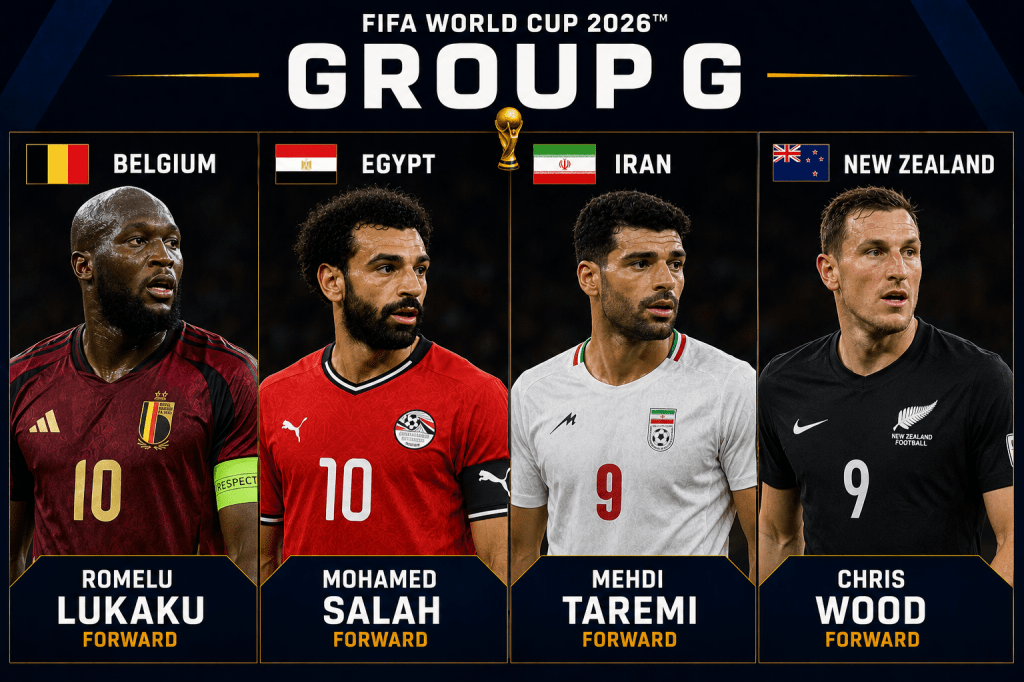
Belgium meet Egypt, Iran and New Zealand in a section they will be expected to win.
Belgium — FIFA ranking: 9
Belgium are transitioning beyond parts of their previous golden generation, but significant quality remains.
Kevin De Bruyne is still the creative reference point, Jérémy Doku provides penetration and Amadou Onana adds athleticism in midfield.
Players to watch: Kevin De Bruyne, Jérémy Doku, Amadou Onana and Loïs Openda.
Strengths: Creativity, wide dribbling, midfield quality and tournament experience.
Weaknesses: An ageing core, defensive uncertainty and continued dependence on De Bruyne.
Egypt — FIFA ranking: 29
Egypt’s strategy will again centre on Mohamed Salah.
Omar Marmoush provides another major threat, allowing Egypt to attack through more than one outlet. Their likely approach is a compact block followed by quick passes into the channels.
Players to watch: Mohamed Salah, Omar Marmoush, Mostafa Mohamed and Mohamed Elneny.
Strengths: Elite counter-attacking forwards, defensive discipline and tournament pragmatism.
Weaknesses: Limited creativity away from Salah and Marmoush, and a tendency to retreat too deeply.
Iran — FIFA ranking: 21
Iran remain one of Asia’s most consistent national teams.
Mehdi Taremi leads the attack, Alireza Jahanbakhsh provides experience and Saman Ghoddos offers technical quality in midfield. The reported absence of Sardar Azmoun reduces their attacking depth.
Players to watch: Mehdi Taremi, Alireza Jahanbakhsh, Saman Ghoddos and Mehdi Ghayedi.
Strengths: Defensive organisation, experience and direct attacking.
Weaknesses: Reduced attacking depth, limited pace at the back and difficulty chasing matches.
New Zealand — FIFA ranking: 85
New Zealand are the lowest-ranked team at the tournament.
Chris Wood provides an obvious focal point, while Liberato Cacace and Sarpreet Singh add quality around him.
Players to watch: Chris Wood, Liberato Cacace, Sarpreet Singh and Marko Stamenic.
Strengths: Aerial power, set pieces, physical commitment and a clear direct identity.
Weaknesses: Limited depth, defensive exposure against fast attackers and an enormous step up in opposition.
Group G prediction
- Belgium
- Egypt
- Iran
- New Zealand
Belgium should advance, but Egypt versus Iran could determine second place.
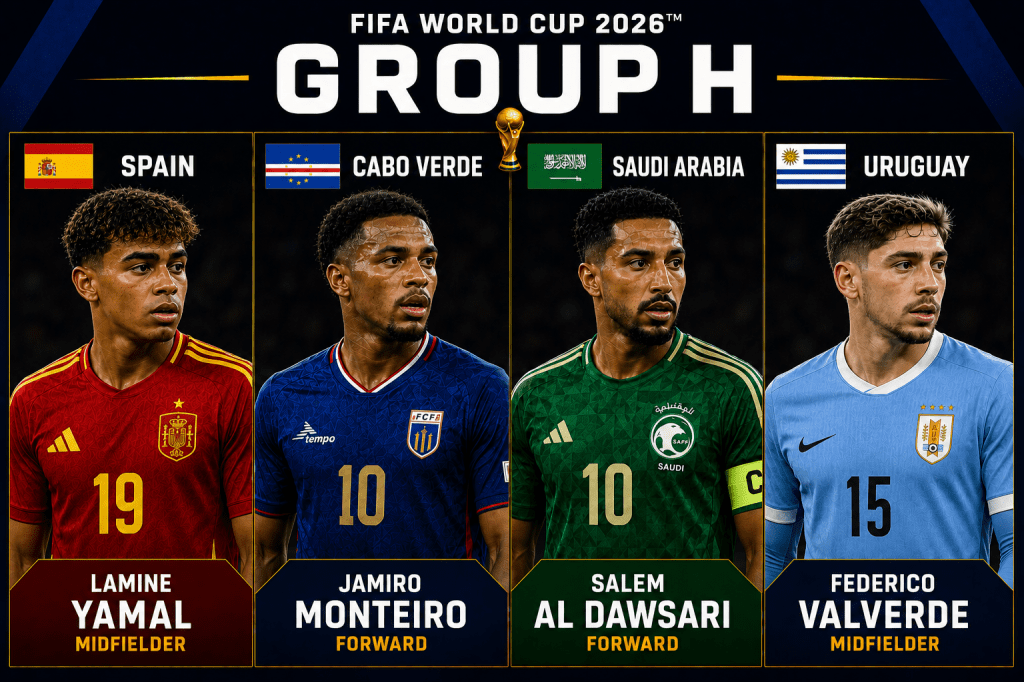
European champions Spain face Cabo Verde, Saudi Arabia and Uruguay.
Spain — FIFA ranking: 2
Spain combine possession dominance with genuine width and acceleration.
Lamine Yamal and Nico Williams stretch opponents, while Pedri, Rodri and Martín Zubimendi can control midfield. Their defensive press is as important as their passing.
Players to watch: Lamine Yamal, Pedri, Rodri and Nico Williams.
Strengths: Midfield control, pressing, wide attacking and exceptional technical depth.
Weaknesses: Vulnerability to direct counters and occasional over-elaboration around the penalty area.
Cabo Verde — FIFA ranking: 69
Cabo Verde make their World Cup debut after an outstanding qualifying campaign.
Ryan Mendes provides leadership, Dailon Livramento supplies movement in attack and Kevin Pina controls midfield. Their unity and physical competitiveness will make them difficult opponents.
Players to watch: Ryan Mendes, Dailon Livramento, Kevin Pina and Jovane Cabral.
Strengths: Team unity, athleticism, diaspora talent and freedom from expectation.
Weaknesses: Limited tournament experience and the possible absence or reduced fitness of defender Logan Costa.
Saudi Arabia — FIFA ranking: 61
Saudi Arabia demonstrated in 2022 that they can produce a major upset.
Salem Al-Dawsari remains the key attacking figure, while Saud Abdulhamid provides energy from full-back. A late coaching change, however, complicates their preparations.
Players to watch: Salem Al-Dawsari, Saud Abdulhamid, Firas Al-Buraikan and Mohammed Kanno.
Strengths: Technical combinations, mobility and experience playing together.
Weaknesses: Defensive vulnerability, limited physical power and managerial disruption.
Uruguay — FIFA ranking: 17
Uruguay under Marcelo Bielsa play with intensity, aggressive pressing and vertical passing.
Federico Valverde drives midfield, Darwin Núñez stretches defences and Ronald Araújo provides defensive speed.
Players to watch: Federico Valverde, Darwin Núñez, Ronald Araújo and Manuel Ugarte.
Strengths: Pressing, midfield athleticism, defensive aggression and tournament mentality.
Weaknesses: Bielsa’s man-oriented press can leave large spaces, while the attack can be wasteful.
Group H prediction
- Spain
- Uruguay
- Cabo Verde
- Saudi Arabia
Spain and Uruguay are clear favourites, but Cabo Verde have the organisation to compete for a third-place qualification spot.
Group I: France, Senegal, Iraq and Norway
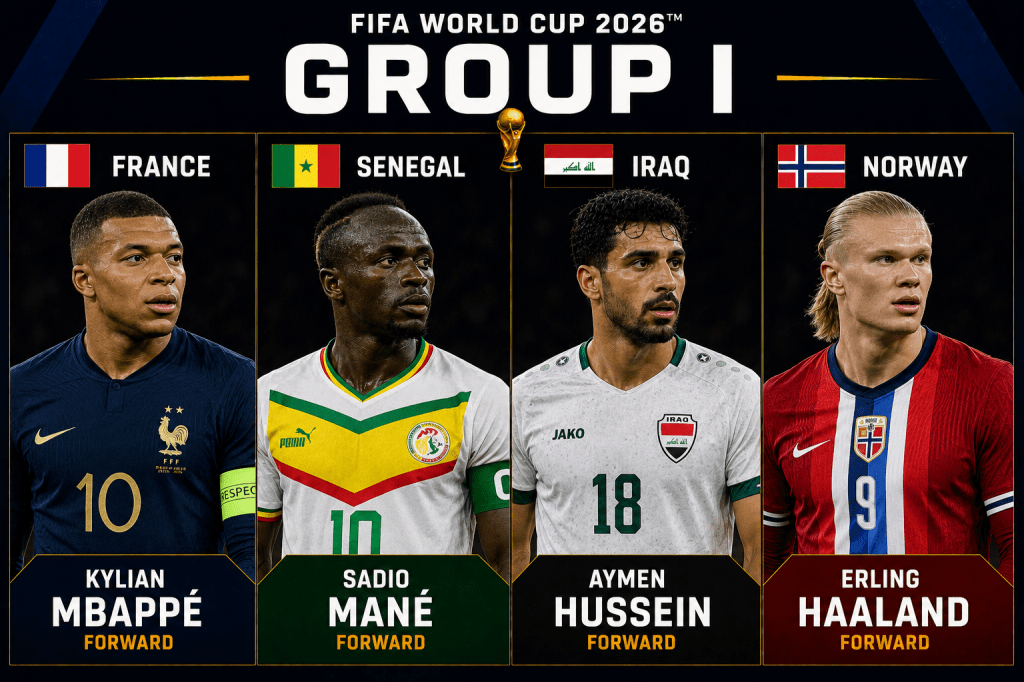
France face Senegal, Iraq and Norway in a group filled with physical power and elite attacking talent.
France — FIFA ranking: 1
France possess arguably the deepest squad in world football.
Kylian Mbappé is the primary goalscorer, Ousmane Dembélé brings unpredictability and William Saliba leads an outstanding group of defenders.
Players to watch: Kylian Mbappé, Ousmane Dembélé, William Saliba and Aurélien Tchouaméni.
Strengths: Pace, depth, individual quality, defensive athleticism and tournament experience.
Weaknesses: They can become passive when protecting leads and occasionally depend on individual moments rather than collective attacking patterns.
Senegal — FIFA ranking: 14
Senegal enter as one of Africa’s strongest and most balanced sides, although the reported omission of Sadio Mané significantly changes their attack.
Kalidou Koulibaly and Edouard Mendy provide experience, while Nicolas Jackson and Ismaïla Sarr offer pace.
Players to watch: Nicolas Jackson, Ismaïla Sarr, Pape Matar Sarr and Kalidou Koulibaly.
Strengths: Physical power, defensive experience, midfield athleticism and transition threat.
Weaknesses: Reduced creativity without Mané and occasional problems breaking down deep defensive structures.
Iraq — FIFA ranking: 57
Iraq reached the World Cup by defeating Bolivia in the intercontinental play-off, ending a 40-year absence.
Aymen Hussein provides aerial power, Ali Al-Hamadi attacks space and Zidane Iqbal offers midfield technique.
Players to watch: Aymen Hussein, Ali Al-Hamadi, Zidane Iqbal and Amir Al-Ammari.
Strengths: Emotional momentum, direct attacking, physical commitment and a strong national identity.
Weaknesses: Limited depth, defensive exposure and little experience against elite tournament opponents.
Norway — FIFA ranking: 31
Norway possess two genuinely elite attacking players.
Erling Haaland provides extraordinary finishing, while Martin Ødegaard dictates the final pass. Antonio Nusa adds one-against-one ability.
Players to watch: Erling Haaland, Martin Ødegaard, Antonio Nusa and Sander Berge.
Strengths: Elite goalscoring, set pieces, physical power and creative passing.
Weaknesses: Defensive consistency and a possible overdependence on Haaland and Ødegaard.
Group I prediction
- France
- Norway
- Senegal
- Iraq
Senegal are fully capable of finishing second, but Haaland gives Norway a match-winning quality few countries possess.


Leave a Reply