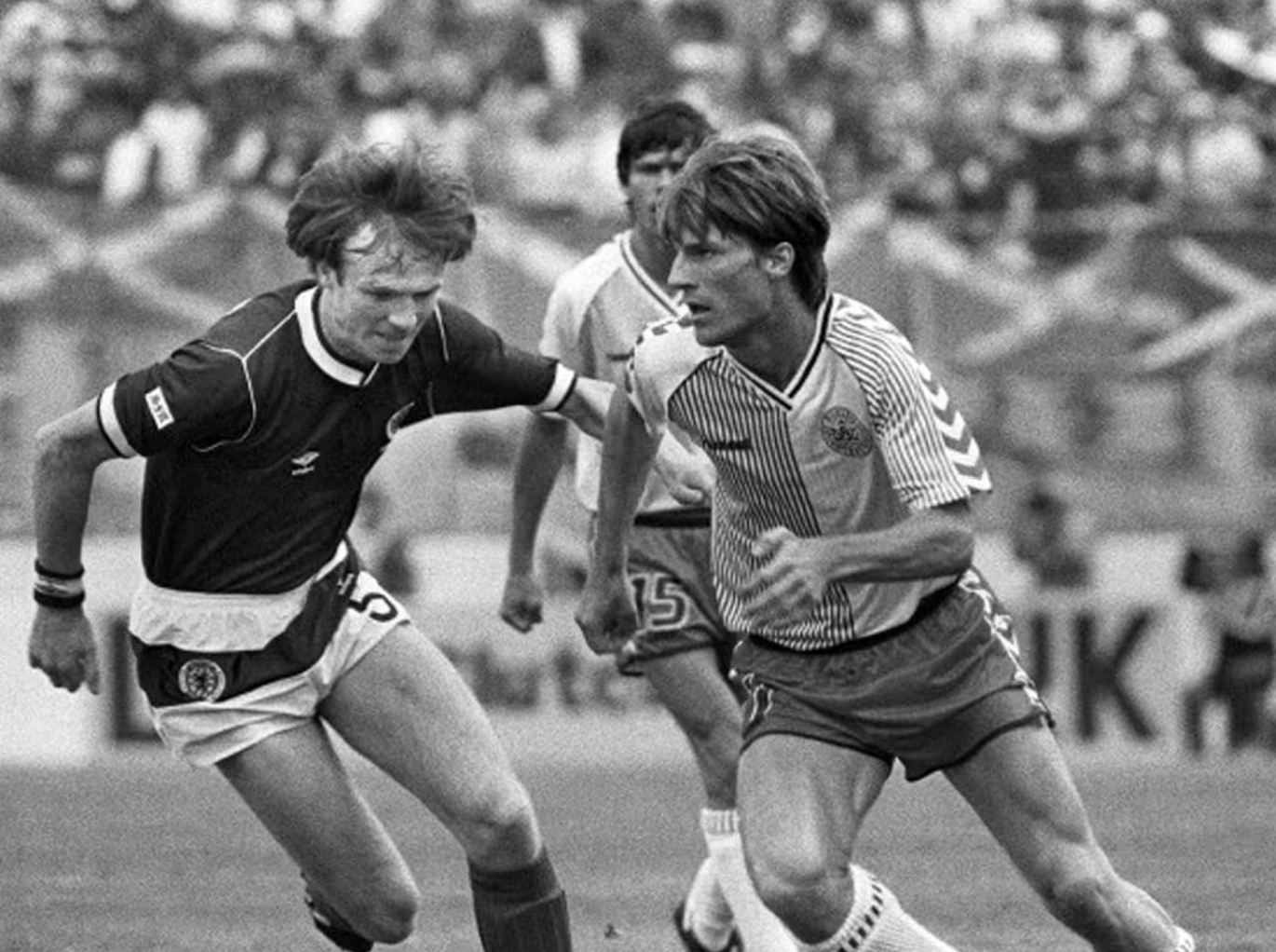
Michael Laudrup was the kind of footballer who rarely looked like he was trying to dominate a match, yet somehow everything important seemed to pass through him.
He did not play with the theatrical edge of Maradona, the emotional weight of Roberto Baggio, or the cold statistical certainty of later attacking midfielders. Laudrup’s genius was quieter. He drifted, received, turned, waited, and then opened the pitch with a pass that made the game look far simpler than it was.
For those who watched him closely, he was one of the purest playmakers football has produced. A player of elegance, balance and intelligence, but also one whose influence was not always fully captured by goals or traditional numbers. Laudrup often created the pass before the assist, the movement before the chance, the angle before the attack became obvious.
He was a star at Juventus, a central figure in Johan Cruyff’s Barcelona Dream Team, a title winner at Real Madrid, and Denmark’s greatest footballing export. Yet his cult status comes from something more specific: the feeling that he understood football in a language only a few players could speak.
Playing Style
Laudrup was nominally an attacking midfielder or second striker, but those labels feel too stiff for a player of his imagination. He moved across the attacking third with total freedom, often receiving between the lines before slipping passes into areas defenders had not protected quickly enough.
His greatest gift was vision. Not just seeing the obvious through ball, but seeing the disguised one. Laudrup had a rare ability to make a pass look late and early at the same time. He would wait long enough to draw defenders towards him, then release the ball at the exact moment the runner had gained separation.
The famous “Laudrup pass” became part of his mythology: looking one way and sliding the ball the other, often through the smallest of gaps. It was not simply showmanship. It was manipulation. He used body shape, eye movement and timing to move defenders before he moved the ball.
Technically, he was beautiful to watch. His touch was soft, his balance natural, and his dribbling smooth rather than aggressive. He did not beat players with raw pace; he unbalanced them. He carried the ball as if he was waiting for the match to reveal its weakness.
What made Laudrup especially difficult to defend was that he did not always play at the same rhythm. He could slow an attack down, invite pressure, and then accelerate the move with one touch. He was not a high-volume passer in the modern possession-stat sense; his value came from the quality of the opening he created. When he received the ball between midfield and defence, defenders were forced into an uncomfortable choice. Step out, and he could slide a runner in behind. Hold position, and he could carry the ball into the space they refused to close.
There was also a generosity to his game. Laudrup had the ability to score more than he did, but he often seemed more interested in creating the perfect chance for someone else. That was part of his charm and part of why some traditional measures undersell him. He was not obsessed with being the final act. He was often the player who made the final act inevitable.
His game also had a rare calmness. In crowded central areas, he seemed to trust his first touch completely. He did not need dramatic body strength or endless running because his positioning did so much of the work before the ball arrived. By the time opponents reached him, the pass was usually already forming.
That is why he remains such a favourite among football romantics. Laudrup was not only effective. He was graceful. He belonged to that small group of players who did not simply play within a system, but made the system feel more intelligent.
Rise to Fame
Laudrup emerged in Denmark before moving through Brøndby and into Italian football, where Juventus signed him while he was still young. His early years in Italy included time at Lazio before he became part of a Juventus side that won Serie A in the mid-1980s.
Italy helped sharpen him, but it did not fully release him. Serie A was tactically demanding and defensively intense, especially during that period. Laudrup learned the value of space because he often had so little of it. But the environment that would truly unlock him came later.
In 1989, he joined Barcelona, where Johan Cruyff was building something that would reshape the club’s identity. For Laudrup, it was the perfect meeting of player and philosophy. Cruyff wanted intelligence, movement, technique and courage on the ball. Laudrup had all of it.
Barcelona and the Dream Team
Laudrup’s Barcelona years are the core of his legend. Cruyff’s Dream Team did not just win trophies; it changed how Barcelona saw itself. Before the Guardiola era, before Messi became the club’s defining figure, this was the side that gave modern Barcelona much of its footballing language.
Laudrup was central to that transformation. Playing alongside talents such as Hristo Stoichkov, Ronald Koeman, Pep Guardiola and later Romário, he became the team’s elegant connector. He was not always the final scorer or the obvious headline, but he often made the attack breathe.
Barcelona won four consecutive La Liga titles between 1991 and 1994, as well as the club’s first European Cup in 1992. That matters because Barcelona had long carried the weight of European near-misses. Cruyff’s side changed that, and Laudrup was one of its artists.
His role in that side was about timing and interpretation. Cruyff’s Barcelona needed players who could understand space before it opened, not after. Laudrup gave them exactly that. He could drift away from markers, receive inside the left channel, combine centrally, or slide passes into the box for runners arriving from different angles. He was not a fixed No. 10 in the modern sense. He was a roaming creative reference point.
This was especially important because Cruyff’s system placed huge value on positional intelligence. Barcelona wanted to stretch the pitch, move the ball cleanly and create superiorities in the right zones. Laudrup made those ideas feel natural. When the structure worked, he gave it imagination. When matches became tight, he gave it invention.
His partnership with Romário was particularly devastating. Romário made sudden, ruthless movements around the box; Laudrup had the vision to find him. It was a perfect contrast: one player creating the picture, the other finishing it before defenders could react. The 1993/94 season, when Romário arrived and Barcelona won another league title, showed Laudrup at his most refined. He did not need to dominate every second of the match. He only needed a few touches in the right areas to change everything.
The 1992 European Cup win was also hugely significant. Barcelona’s victory over Sampdoria at Wembley finally gave the club the European title it had chased for decades. Ronald Koeman scored the decisive free-kick, but the wider achievement belonged to the collective Cruyff had built. Laudrup was a major part of that identity: technical, intelligent, brave and comfortable with the ball in pressure moments.
At his peak, Laudrup was not just one of the best players in Spain. He was one of the best players in the world. Yet his brilliance was never only about individual highlights. It was about how he improved the rhythm of a team. Barcelona looked more fluid with him because he connected the spaces between midfield and attack. He gave Cruyff’s ideas personality.
The Real Madrid Twist
The most intriguing part of Laudrup’s career came in 1994, when he left Barcelona for Real Madrid.
Transfers between those two clubs always carry emotional weight, but Laudrup’s move had extra meaning because of what followed. In his final season at Barcelona, the club beat Real Madrid 5–0. In his first season at Real Madrid, he helped Madrid beat Barcelona 5–0.
Few players in football history have been on the winning side of that scoreline in both directions of El Clásico. It says something about his intelligence and adaptability that he could cross that divide and immediately become influential.
With Real Madrid, Laudrup won another La Liga title in 1994/95, meaning he claimed five consecutive Spanish league titles across Barcelona and Madrid. That detail alone should place him more prominently in conversations about the greatest playmakers of his era.
He was not simply carried by great teams. Great teams looked smoother when he was in them.
Denmark
For Denmark, Laudrup’s career was brilliant, though complicated. He earned 104 caps and scored 37 goals, becoming one of the national team’s defining players. He starred at the 1986 World Cup, where Denmark played some of the most exciting football of the tournament, and later represented his country again at France 1998.
The one obvious absence from his international story is Euro 1992. Denmark famously won the tournament, but Laudrup was not part of the squad after a disagreement with the national team set-up. It remains one of football’s great what-ifs: Denmark’s greatest player absent from Denmark’s greatest triumph.
Yet his international legacy still stands. His performances across the 1980s and 1990s gave Denmark a player who belonged among football’s elite creative talents. At France 1998, he helped Denmark reach the quarter-finals, where they pushed Brazil in one of the tournament’s most entertaining matches.
Cult Legend Status
Laudrup’s cult status comes from the gap between how good he was and how often he is mentioned.
Among players, coaches and serious football watchers, his reputation is enormous. He is regularly described as one of the most elegant and intelligent footballers of his generation. But mainstream football memory can be ruthless. It often favours explosive personalities, Champions League dynasties, World Cup winners, or players with simple statistical dominance.
Laudrup does not fit neatly into that kind of memory. His game was about influence rather than noise. He was not a player whose greatness could be reduced to goals, assists or trophies, even though he had plenty of success. To understand Laudrup, you had to watch the whole move, not just the finish.
That is why he remains a cult figure. He belongs to the people who love the details: the body feint before the pass, the half-turn in midfield, the disguised reverse ball, the ability to make elite football look unforced.
End of Career and Legacy
After Spain, Laudrup had later spells with Vissel Kobe and Ajax, where he added more silverware before retiring in 1998. He then moved into management, with his most memorable coaching success coming at Swansea City, where he won the League Cup in 2013.
But his playing legacy remains the real monument. Laudrup was the artist of Cruyff’s Dream Team, a rare player who won league titles on both sides of Spain’s biggest rivalry, and a footballer whose style still feels modern because intelligence never ages.
Some players make football look faster. Laudrup made it look clearer.
Key Statistics and Achievements
International Career
- Denmark: 104 caps, 37 goals
- Represented Denmark at the 1986 World Cup, Euro 1988, Euro 1996 and 1998 World Cup
- Helped Denmark reach the 1998 World Cup quarter-finals
Barcelona
- 297 appearances, 96 goals
- 4 La Liga titles: 1990/91, 1991/92, 1992/93, 1993/94
- European Cup winner: 1991/92
- Copa del Rey winner: 1989/90
- European Super Cup winner: 1992
- Key figure in Johan Cruyff’s Barcelona Dream Team
Real Madrid
- La Liga winner: 1994/95
- Became one of the rare players to win league titles with both Barcelona and Real Madrid
- Won five consecutive La Liga titles across Barcelona and Real Madrid
Other Club Honours
- Juventus: Serie A winner
- Ajax: Eredivisie winner, KNVB Cup winner
- Also played for Lazio and Vissel Kobe
Individual Legacy
- Widely regarded as Denmark’s greatest ever footballer
- Remembered as one of the most elegant and intelligent playmakers of his generation
- Celebrated for his vision, disguised passing, balance and ability to dictate attacking rhythm
Sources / References
- FC Barcelona official profile – Background on Laudrup’s role in Johan Cruyff’s Dream Team, including his Barcelona record, style of play, and major honours with the club.
- Real Madrid official legends profile – Reference for Laudrup’s move to Real Madrid, his impact in the 1994/95 La Liga-winning season, and his place in the club’s history.
- IFFHS Legends profile – Used for international career details, including Denmark caps/goals, major club honours, and broader career recognition.
- UEFA archives – Context on Barcelona’s 1992 European Cup triumph and Laudrup’s wider European legacy.
- Transfermarkt – Supporting reference for career timeline, appearances, positions and honours across Juventus, Lazio, Barcelona, Real Madrid, Ajax and Denmark.


Leave a comment